
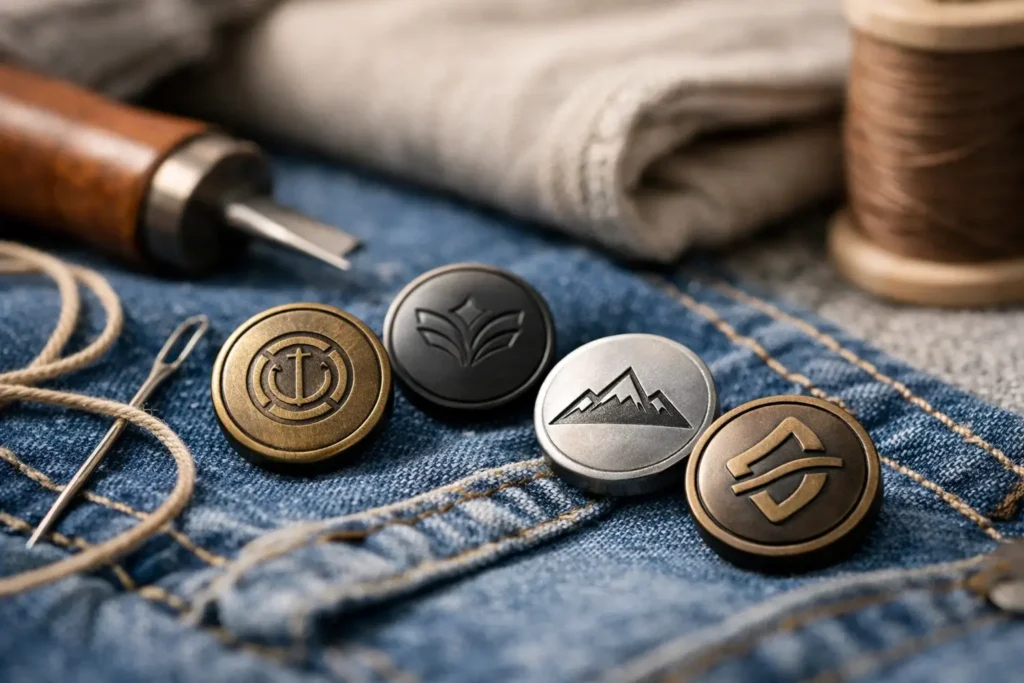
A blazer can carry an excellent label, fabric, and fit, then lose its premium impression because its buttons look generic. Custom logo engraved buttons solve that small but highly visible problem. They turn a functional garment component into a repeatable brand detail – one customers touch, see up close, and remember.
For apparel brands and garment manufacturers, the goal is not simply adding a logo to a button. The goal is producing a button that keeps its definition, color, attachment performance, and visual consistency from the approval sample through bulk delivery. That requires decisions about material, artwork, mold construction, finishing, and production control before the first mass-production run begins.
Why Custom Logo Engraved Buttons Matter
Buttons sit at the center front of a shirt, on the cuff of a tailored jacket, or along the placket of a uniform. Their placement makes them more noticeable than many trims, especially when a garment is handled in a retail setting. A clear engraved logo can make an unbranded-looking component feel intentional and proprietary.
The effect depends on the product category. A subtle tonal engraving may be right for a luxury shirt or minimalist knitwear, while a deeper, darker-filled mark may suit workwear, school uniforms, or outerwear that needs easy recognition. The correct treatment is not always the most prominent one. It is the one that matches the garment’s price point, fabric, end use, and brand character.
For sourcing teams, custom buttons also offer practical protection against visual substitution. A unique mold, logo arrangement, or proprietary finish makes it more difficult for a generic replacement button to create the same finished appearance. That does not replace broader brand-protection work, but it adds a distinctive production detail to the garment.
Start With the Material, Not the Engraving
Logo engraving behaves differently across button materials. Selecting material first prevents a common development mistake: approving an attractive artwork file without considering whether the chosen button substrate can reproduce it clearly at the required size.
Resin and polyester buttons
Resin and polyester buttons are popular for fashion apparel because they offer broad color options, stable production performance, and flexible shapes. They work well for engraved logos, recessed lettering, debossed borders, and filled marks. Marbled, horn-look, pearl-look, and transparent effects can also be developed, although highly active patterns may reduce logo visibility.
For a small shirt button, simple initials or a compact icon generally reproduce better than a detailed crest. The engraving needs sufficient depth and width so it remains readable after polishing, washing, and normal abrasion.
Corozo and natural materials
Corozo gives a refined, natural appearance with a warm surface and visible organic character. It is often selected for tailored clothing, premium knitwear, and outerwear. Engraving on corozo can look elegant and understated, but natural grain means the color and texture will not be as uniform as molded resin.
Horn buttons provide another premium option. Their natural variation is part of their appeal, yet it requires realistic expectations during approval. Brands should define an acceptable range for tone, grain, and logo appearance rather than expecting every button to look identical.
Metal, ceramic, and specialty buttons
Metal supports crisp logos, especially for jeanswear, uniforms, jackets, and branded outerwear. The mark may be stamped, engraved, laser marked, or combined with enamel or plating depending on the design. Ceramic can create a distinctive high-end surface, but it requires careful handling and a design suitable for the firing process.
Recycled button materials can support sustainability objectives, but recycled content may introduce natural variation in color or texture. A factory should review the required logo detail and target color before recommending a specific recycled formulation.
Designing Custom Logo Engraved Buttons That Produce Well
A logo on a screen and a logo on a 15 mm button are not the same design problem. Fine lines, small enclosed spaces, very thin type, and crowded details can disappear during molding or finishing. The most successful button artwork is simplified for the available surface area while retaining the brand’s recognizable elements.
Start by identifying the button diameter, thickness, hole configuration, and placement of the mark. A four-hole shirt button leaves less uninterrupted logo space than a shank button. A raised rim can frame the logo, but it can also limit the usable center area. If the logo will appear on several sizes, each size may need its own adjusted artwork rather than one file scaled down repeatedly.
Engraving depth must also be specified. Shallow engraving can be elegant, but it may fade visually on a textured material or after a high-gloss finish. Deeper engraving improves contrast, yet excessive depth can affect the button’s face strength or create rough edges. Factory sampling is the reliable way to balance appearance and performance.
Choose a finish that supports the mark
A polished finish reflects light and can make a subtle engraving feel refined, but reflection may reduce readability from certain angles. A matte or frosted finish often gives a recessed logo stronger visual contrast. For metal buttons, antique plating, brushed surfaces, black enamel filling, or two-tone finishes can further define the branding.
Color filling is useful when immediate recognition matters. It adds an extra production step, so the design should account for fill adhesion, color tolerance, and wash resistance. For high-volume uniforms or promotional apparel, a simple engraved mark without fill may be the more efficient and durable choice.
Tooling and Sampling Set the Bulk Standard
For a unique shape, a custom mold is usually required. The mold controls the button body, hole formation, edge profile, and any raised or engraved logo detail. Tooling is an investment in repeatability, which is why brands should approve all visible features during the development stage rather than treating samples as a rough preview.
A useful sample review checks more than the logo itself. Evaluate diameter and thickness, hole smoothness, logo placement, surface gloss, color consistency, edge quality, and how the button looks against the actual garment fabric. A button that appears dark and premium on a white sample card may disappear against navy wool or printed cotton.
For color-sensitive programs, provide a physical color standard or an agreed reference. Digital images help communication, but monitor settings and photography can distort button color. This is especially relevant for resin buttons with translucent, pearlescent, or mixed-color effects.
NZXTRIM supports this process from artwork review and material selection through prototype development, custom mold production, and bulk manufacturing. Early technical discussion helps avoid revisions after tooling is completed and gives purchasing teams a clearer production plan.
Quality Control for Engraved Button Production
Bulk button quality is measured by consistency, not by a single excellent sample. During production, the factory should monitor dimensions, hole condition, engraving clarity, surface defects, color variation, and packing accuracy. The inspection approach should reflect the button type and garment application.
For example, a metal button may require checks for plating consistency, corrosion resistance, and secure shank attachment. A resin button may need close review of color matching, flash removal, and engraving definition. Natural materials require controlled sorting so that acceptable variation is maintained without sending visibly unsuitable pieces into the same order.
Testing requirements should be discussed before production, particularly for children’s apparel, uniforms, workwear, and garments facing frequent laundering. Depending on the construction and market, relevant checks may include pull strength, dry-cleaning performance, wash resistance, color fastness, corrosion behavior, and sharp-edge assessment. A button is a small component, but a failure can affect garment safety, returns, and brand reputation.
Plan MOQ, Lead Time, and Reorders Early
Custom logo work has two timelines: development and production. Development includes artwork confirmation, material selection, mold creation when needed, and sample approval. Bulk production begins after those standards are signed off. Rushing the first order can create avoidable compromises, especially if the project requires custom colors, multiple sizes, or a complex finish.
MOQ depends on material, mold requirements, color complexity, and the number of button sizes in the program. A brand developing a limited capsule may choose a simpler logo treatment or a standard base shape to manage tooling cost. A large uniform program may justify dedicated tooling and multiple matching components, such as buttons, snaps, and badges, to maintain a unified identity.
Reorders are easier when the approved sample, material specification, color reference, mold number, finish, packing method, and inspection requirements are documented. This production record reduces uncertainty when a garment is repeated months later or manufactured across different seasons.
A Better Brief for Your Button Factory
The fastest way to receive an accurate quotation and workable sample plan is to provide the logo file, button size, material preference, quantity, required colors, garment application, and target delivery date. If you have a physical reference button, include photographs and measurements, or send the reference sample for evaluation.
It also helps to state what cannot change. That may be a corporate color, a specific logo orientation, a wash-performance requirement, or a target cost. With those priorities defined, the factory can recommend where flexibility is possible – perhaps in finish, material blend, edge profile, or packaging – without weakening the branded result.
A well-made button should feel like it belongs to the garment, not like an afterthought attached at the end. When your artwork, material, tooling, and quality standard are aligned before bulk production, a small engraved detail can carry your brand through every unit you ship.