
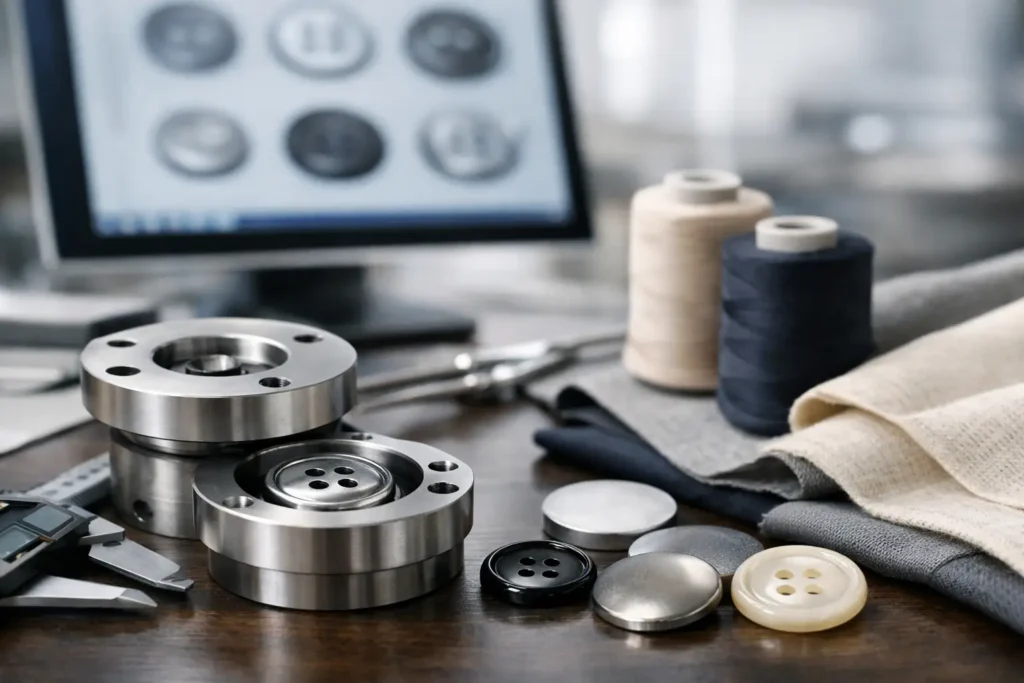
A button may be small, but its mold determines whether it becomes a reliable garment component or a recurring production problem. For apparel brands, manufacturers, and sourcing teams, a professional button mold design service turns a sketch, reference sample, logo, or technical drawing into a production-ready tool built for repeatable quality.
The objective is not simply to make one attractive sample. It is to create a mold that can deliver the intended shape, detail, color, surface finish, and attachment performance across a full production run. That requires design judgment, material knowledge, tooling precision, and a clear understanding of how buttons will be manufactured at scale.
Why Mold Design Matters in Button Production
A custom button mold establishes the physical standard for every button produced from it. Its cavity geometry controls the outer profile, edge definition, holes or shank position, logo depth, and decorative relief. Even a minor issue in the mold can affect how the button looks, how it sits on the garment, or how consistently it can be produced.
For example, a deep engraved logo may look sharp in a digital rendering but may trap material or lose definition after polishing. A very thin button edge can create an elegant appearance, yet it may be more vulnerable to deformation, chipping, or breakage depending on the selected material. A well-designed mold accounts for these production realities before bulk manufacturing begins.
This is especially relevant for garments where trims are part of the product identity. A tailored blazer, denim collection, luxury knitwear line, uniform program, or branded workwear range may use buttons to reinforce its market position. The button must support the garment design while meeting practical requirements for sewing, washing, wear, and repeat ordering.
What a Button Mold Design Service Should Include
A complete service begins with development support rather than tooling alone. The factory should review the intended button application, material, size, quantity, and visual target before confirming the mold structure. This early review reduces avoidable revisions later in sampling or production.
The design process commonly starts from a reference button, artwork, logo file, technical sketch, or garment trim board. From there, the production team develops the dimensions and structural details needed for manufacturing. These include button diameter or length, thickness, rim shape, hole configuration, shank design, back profile, engraving position, and surface texture.
For branded buttons, logo work needs particular attention. Fine lines, small lettering, and intricate symbols can be manufactured, but the best approach depends on the button size and material. A logo that reads clearly on a 25 mm metal button may need to be simplified for a 15 mm resin shirt button. The goal is to preserve brand recognition without creating details that are difficult to reproduce consistently.
A dependable button mold design service should also consider draft angles, material flow, release from the mold, shrinkage, polishing access, and finishing requirements. These are technical details that customers may not see in the final button, but they directly affect production efficiency and appearance.
Material Choice Changes the Mold Strategy
The same button design cannot always be transferred directly from one material to another. Resin, corozo, metal, ceramic, horn, and recycled materials have different processing behavior, surface characteristics, and tolerance requirements. Mold design must follow the material instead of treating every button as the same product.
Resin buttons offer broad flexibility in color, transparency, marbling, inclusions, and molded shapes. They are suitable for fashion collections that need consistent custom colors or decorative effects. Tooling must account for resin flow and the finishing process, particularly when the button includes multiple layers, a detailed rim, or a polished surface.
Corozo buttons are valued for their natural grain and refined appearance. Because corozo is made from a natural nut, slight visual variation is part of its character. The mold or cutting setup must balance the desired profile with efficient use of the raw blank and stable hole placement.
Metal buttons can support crisp logos, embossed details, plated finishes, and strong brand presentation. However, deep relief, sharp corners, and complex assembly structures can affect tooling cost and production time. A factory should advise whether a stamped, die-cast, or assembled metal construction is the most suitable option for the design.
Ceramic and horn buttons require another level of consideration. Ceramic may involve shrinkage during firing, while natural horn has variation in grain, tone, and thickness. These materials can create premium results, but design tolerances and color expectations should be agreed upon clearly before sampling.
Designing for Appearance and Garment Performance
The best button is not evaluated on appearance alone. It must work with the fabric, buttonhole, sewing method, and end use of the garment. A heavy metal button may be appropriate for denim or outerwear but unsuitable for a lightweight blouse. A raised shank can provide useful clearance on thick fabrics, while a sew-through button may sit flatter and suit shirting or knitwear.
Button thickness also affects the garment’s finished look. A thicker profile often feels more substantial and can communicate quality, but it can be difficult to button through a narrow buttonhole. Conversely, a very thin button may reduce bulk but feel less durable. Product developers should provide the intended fabric weight and buttonhole specification during the mold design stage.
Surface finishing deserves the same attention. Matte, polished, brushed, horn-effect, pearlized, antique, painted, and laser-engraved finishes each create a different result. Some finishes make fine details more visible, while others soften them. For a button with a subtle logo or texture, a sample review under real lighting conditions is more reliable than approving a digital image alone.
Sampling Before Mass Production
Sampling is where mold design is tested against the actual product requirement. A physical sample allows the customer to assess the size, hand feel, color, engraving, hole quality, finish, and overall proportion on the garment. It also gives the factory an opportunity to identify any tooling or process adjustments before a larger order begins.
A productive sample approval process compares the button against clear standards. These may include a Pantone reference, approved artwork, a signed sample, garment swatch, dimensional drawing, or existing trim. When all parties work from the same reference, color matching and quality inspection become more consistent.
Some variation is unavoidable, particularly with natural materials, recycled content, handmade effects, or antique finishes. The important point is to define what variation is acceptable. A sourcing team may want consistent color across a uniform order, while a fashion brand using natural horn may prefer visible tonal variation. Both approaches are valid, but they require different production controls.
Questions to Resolve Before Tooling Begins
Before approving a custom mold, buyers should confirm a few practical details with the manufacturer. Clear answers at this stage protect both design intent and delivery timing.
- What material will be used, and is it suitable for the garment’s end use?
- What finished size, thickness, hole size, or shank height is required?
- Will the button include a logo, lettering, texture, or special edge profile?
- What color standard, finish, and acceptable variation range should be followed?
- What sample lead time, production lead time, MOQ, and tooling cost apply?
- Will the factory retain the mold for repeat orders, and how will it be identified?
These discussions are not administrative details. They determine whether the custom button can move efficiently from development to repeatable supply.
Choosing a Manufacturing Partner for Custom Tooling
A mold design service is most valuable when it is connected to actual button manufacturing capability. The factory should be able to assess the design from a production perspective, make samples, manage mold adjustments, run bulk orders, and inspect the finished goods against agreed specifications.
NZXTRIM supports this process from initial concept through mold development, sampling, bulk production, and global delivery. For customers managing multiple styles or seasonal collections, working with one experienced button factory can simplify communication and help maintain consistency across materials, sizes, and repeat orders.
Capacity also matters. A factory may produce an attractive sample but lack the controls needed for larger quantities. Ask about quality inspection, color matching procedures, production scheduling, packaging, and export support. For garment manufacturers with shipment deadlines, dependable delivery is as important as the initial sample approval.
Start With a Production-Ready Brief
The fastest route to a successful custom button is a brief that combines creative direction with technical requirements. Provide the logo or artwork, target material, size range, intended finish, estimated quantity, garment application, and required delivery date. If a physical reference exists, include clear photos and measurements or send a sample for evaluation.
A well-planned mold does more than reproduce a shape. It gives your collection a button that can be approved confidently, produced consistently, and reordered when the next production schedule arrives. Submit your custom design early, and let the tooling process support the quality your garments are meant to deliver.