
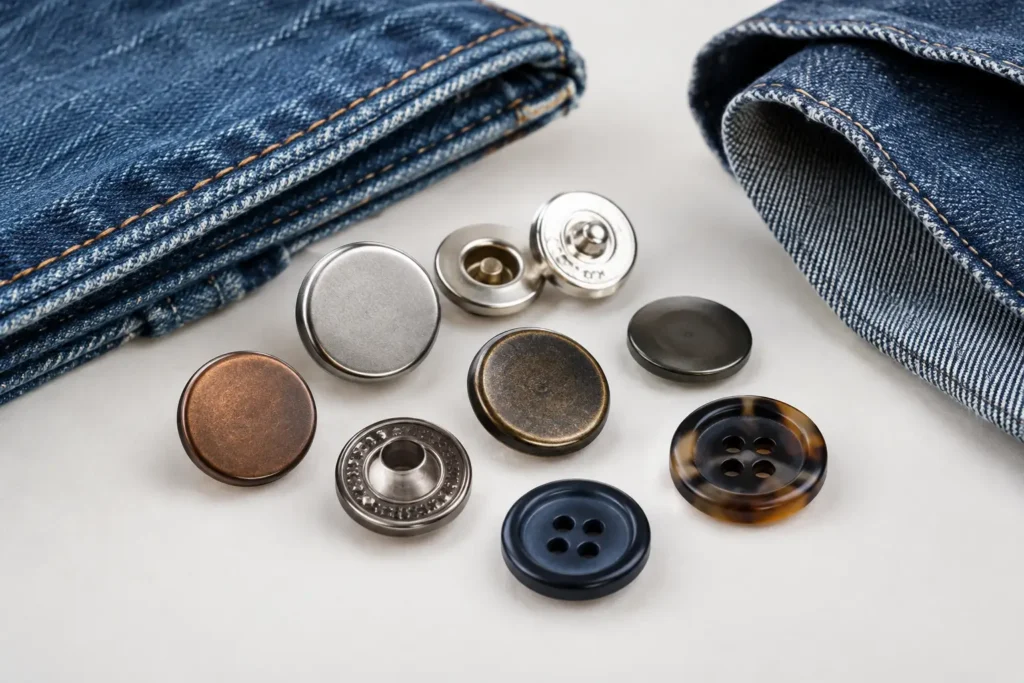
A denim button is exposed to more than everyday fastening. It may pass through garment washing, abrasion, pressing, packing, and repeated use before the wearer sees it. The best button materials for denim therefore depend on the garment construction, wash recipe, intended visual effect, and how consistently the specification can be reproduced at bulk scale.
For most denim programs, metal is the starting point because it supports the familiar jeans-button appearance and can be specified in constructions suited to heavier fabrics. That does not make metal the automatic answer. A dyed denim overshirt, premium denim dress, or lightweight chambray program may benefit more from resin, corozo, horn, or shell. Material selection should begin with the garment’s end use and production process, not only the mood board.
Best Button Materials for Denim: The Practical Choice
The first decision is whether the button is structural, decorative, or both. A front waistband closure on five-pocket jeans has different demands from a fly button, cuff button, shirt placket button, or detachable fashion detail. Size, attachment method, buttonhole construction, fabric weight, and washing sequence all affect the appropriate material.
A production-ready button specification should identify the material, size in millimeters or Ligne, construction, finish, color, logo treatment, attachment method, and acceptable appearance range. A reference image can establish direction, but it does not define these details well enough for repeat production.
Metal for classic jeans and workwear
Metal is commonly selected for jeans waist buttons, tack buttons, snap components, and visible hardware because it gives denim a familiar industrial character. It can support engraved, debossed, embossed, or laser-marked branding, depending on the base material, finish, and artwork detail. Antique, matte, brushed, dark, and plated visual directions may be considered during development.
The construction matters as much as the metal finish. A one-piece tack button, a cap-and-tack assembly, and a sew-through metal button behave differently in production and use. For a waistband button, the relationship between cap, tack, fabric thickness, reinforcement layers, and installation equipment needs to be reviewed together. A good-looking cap that is not matched to the garment build can create installation or retention concerns.
Metal also requires early wash development. Denim wash processes can change surface tone, expose edges, alter contrast in recessed logos, or create variation between lots. These effects may be desirable for heritage or distressed styling, but they should be approved from physical washed samples rather than assumed from an unwashed button sample. If the program requires a stable finish, the wash route and performance expectations need to be confirmed before bulk production.
Resin for controlled color and lighter constructions
Resin buttons are a practical option where a program needs coordinated color, lower apparent weight, or a cleaner fashion finish than metal provides. Polyester and other resin-based constructions can be developed in solid colors, marbled effects, translucent looks, or molded logo formats. They are often suitable for denim shirts, jackets, dresses, skirts, and lightweight bottoms.
For brands building a color-led denim collection, resin may offer more flexibility than natural materials. A Pantone reference can guide development, but the final visual match should be approved under agreed viewing conditions and on the actual button form. Thickness, gloss level, texture, base color, and garment wash can all change how the color is perceived.
Resin is not one uniform category. A two-hole shirt button, a four-hole jacket button, and a molded shank button require different construction decisions. The button must also be proportioned for the fabric and buttonhole. A thin button may suit a soft denim shirt but look underbuilt on a heavyweight jacket placket.
Corozo for natural depth and refined denim
Corozo has a distinctive organic grain that works particularly well with premium denim, chore jackets, overshirts, and denim pieces positioned away from traditional riveted-jean styling. It offers visual depth that cannot be reproduced exactly in molded materials, especially when dyed, laser marked, or finished to retain some natural character.
Its variation is part of its appeal and part of the specification challenge. Color uptake, grain visibility, and surface appearance can vary across pieces. Development should establish whether the brand wants a more uniform appearance or accepts natural variation as a design feature. This distinction should be written into the approval standard, particularly when several garment factories or delivery lots are involved.
Corozo buttons are usually better suited to sew-through applications than high-load tack-button uses. On washed denim, sampling should include the actual wash process or a close production representative. The goal is not to eliminate every natural difference, but to define what remains acceptable after the garment process.
Horn, shell, and wood for selected fashion programs
Horn, shell, and wood can make a denim garment feel more considered, but each requires a narrower use case than metal or resin. These materials are usually selected for visible shirt, jacket, or overshirt buttons rather than hard-working waistband hardware.
Horn brings tonal variation and a dense, natural appearance that can complement dark indigo, black denim, or tailored denim. Shell can provide a lighter, more luminous surface for denim shirts and womenswear. Wood introduces warmth and texture, but its suitability depends heavily on the finish, button construction, garment care route, and wash exposure.
Natural materials should be sampled as real production candidates, not represented only by a swatch or digital render. Their visual range, thickness tolerance, logo visibility, and response to washing may differ from a polished presentation sample. When a design relies on natural variation, the brand should still define limits for cracks, color range, surface marks, and edge quality.
Match Construction to the Denim Garment
Material selection becomes more reliable when it is tied to the garment position. Heavy jeans waistbands generally point toward purpose-designed metal button constructions. Denim shirt plackets often use sew-through resin, corozo, horn, shell, or smaller metal buttons. Jacket cuffs and front closures may use metal, resin, or natural materials according to the garment weight and desired hand feel.
Size should not be copied from an existing garment without checking the new fabric build. Waistband layers, interfacing, pocketing, and seam allowances can alter the thickness at installation. For sew-through buttons, hole diameter and spacing must accommodate the sewing thread and machine setup. For shank buttons, shank clearance affects how the button sits against the fabric.
Logo detail also has physical limits. Fine lines, small type, and shallow artwork may lose definition after plating, coating, tumbling, washing, or repeated handling. A clear logo file helps, but tooling review determines what can be reproduced consistently at the chosen size. In some cases, simplifying the artwork or increasing the button diameter delivers a more dependable result than forcing fine detail into a small surface.
Sampling Before You Commit to Bulk
For denim trims, a useful sample sequence usually starts with material and finish direction, then confirms the exact size, construction, and branding method. The next sample should be installed on the garment or a representative fabric build. It should then be evaluated after the intended wash or finishing process where relevant.
This sequence prevents a common sourcing problem: approving a loose button that looks correct, then finding that the installed and washed garment tells a different story. The garment process can reveal sharp edges, finish changes, logo visibility issues, attachment concerns, or unwanted contrast against the denim.
Sampling also provides the point to align commercial details. Tooling needs depend on whether a new mold, logo die, or custom construction is required. Minimum order quantity, development timing, bulk timing, packing method, and delivery planning should be confirmed for the selected material and project rather than assumed from a different button program. Where a buyer requires recycled-content declarations, restricted-substance documentation, or a defined testing scope, those requirements should be reviewed against the exact button, finish, order, and supply route.
NZXTRIM supports denim button development by translating visual direction into a specification that can be sampled, reviewed, and prepared for bulk production. The most effective inquiries include garment photos or tech packs, button position, target size, artwork, fabric weight, expected wash route, quantity range, and required delivery window.
The right denim button is rarely the most decorative option in isolation. It is the material and construction that still looks intentional after installation, washing, handling, and scale-up – with an approval standard clear enough for every production partner to follow.