
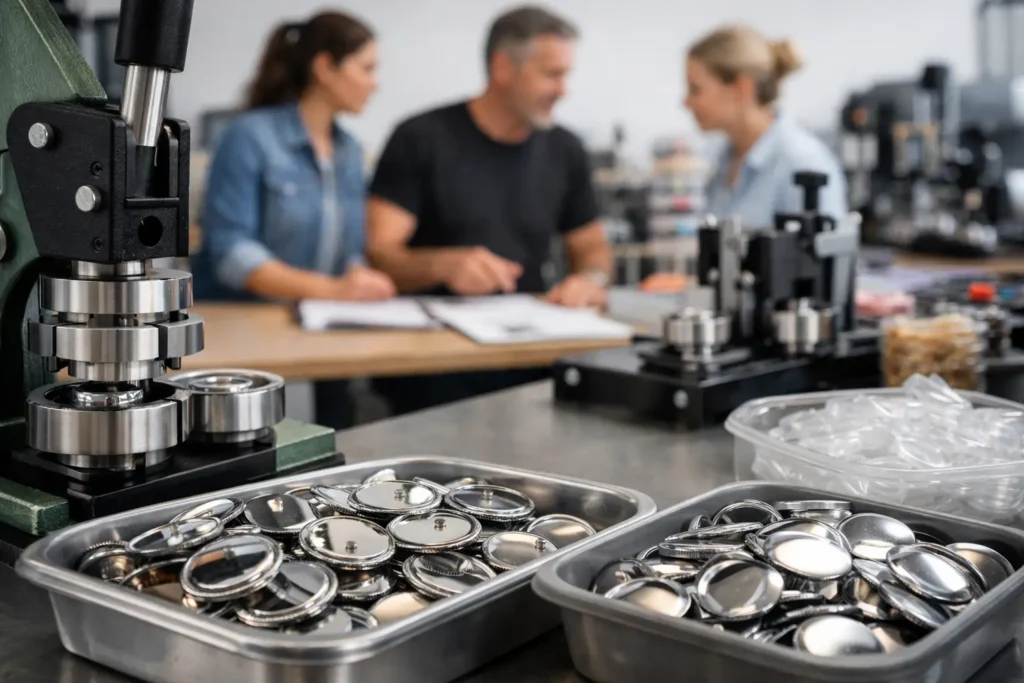
A button factory is only as useful as its ability to turn a visual idea into a repeatable garment component. For apparel teams, assessing button factory capabilities means looking beyond a material swatch or an attractive sample. The practical questions are whether the factory can define the construction, develop the finish and color, produce workable tooling, review samples against the specification, and maintain consistency through bulk production.
NZXTRIM supports custom button projects by treating each design as a production specification rather than a decorative concept. That distinction matters when a button must work across multiple garment sizes, colorways, factories, and delivery windows.
What button factory capabilities should include
A capable button supplier should be able to discuss the product in manufacturing terms from the first inquiry. The starting point is the material: corozo, metal, ceramic, horn, shell, wood, resin, recycled materials, and specialist constructions each bring different visual characteristics, processing limits, and sourcing considerations.
Material selection affects more than appearance. Corozo can offer natural variation and accepts certain dyed finishes differently from resin. Metal may support engraved details and plated or coated surfaces, but the construction and intended garment use need to be considered early. Shell, horn, wood, and ceramic have inherent variation that can be desirable in a collection, yet it must be understood before approving a reference sample as the visual benchmark for bulk.
The factory should also establish the button’s physical format: diameter, Ligne size where applicable, thickness, hole count, shank construction, rim profile, back shape, and edge treatment. A two-hole shirt button, a four-hole coat button, and a metal shank button may share a logo but require completely different manufacturing approaches.
Visual artwork alone does not answer these questions. A production-ready brief identifies the intended material, size, construction, finish, logo position, color reference, quantity, and garment application. If one or more of those points is still open, the project is at a feasibility stage, not yet at final production approval.
Custom shape, tooling, and logo detail
Standard round button forms can be practical for many programs, but custom shapes, relief patterns, and proprietary branding often require dedicated tooling. Tooling should be evaluated against the material and the detail requested. Fine lettering that reads clearly in a digital file may fill in, soften, or become difficult to read when reproduced at a small physical scale.
Logo methods also need to match the product. Engraving, debossing, embossing, laser marking, printed details, and raised marks each create a different effect. The best choice depends on the button material, the logo line weight, the required contrast, and how the surface will be viewed in normal garment use.
For example, a deep embossed mark may be suitable for a larger resin or metal button, while a compact shirt button may need a simpler perimeter mark or a cleaner laser-applied detail. Reducing detail is not necessarily a compromise in quality. It is often the correct engineering decision for legibility and repeatability.
Color development is a controlled approval process
Color is one of the most frequent sources of disagreement in custom trims because a Pantone reference is an objective starting point, not an automatic final result. Material base color, dye or pigment method, surface finish, gloss level, texture, and production lot can all influence the appearance of the finished button.
A translucent resin, matte coated metal, dyed corozo, and polished shell will not reflect the same color in the same way. The factory should therefore develop physical samples for approval where color is commercially important. A photo can help communicate direction, but it should not replace approval of the actual material, finish, and construction.
Teams should define the viewing conditions and approved reference early, especially when buttons will be compared with garment fabric, lining, embroidery, or other trims. Color tolerance must be agreed for the specific material and order. Natural materials may show greater visual variation than engineered materials, while high-gloss finishes can appear different under showroom, warehouse, and daylight conditions.
Sampling shows whether the concept can be manufactured
Sampling is where capability becomes visible. A useful sample stage does more than provide a presentation piece. It exposes the decisions that affect bulk production: whether the logo is readable, whether hole placement is workable, whether the shank is appropriate, whether the selected finish meets the intended visual direction, and whether the proposed size works with the garment’s buttonhole and placket.
For custom developments, it is often sensible to move through stages. An initial development sample may confirm shape and general appearance. A revised sample may address color, finish, or logo detail. A final approved sample becomes the reference for the production order, subject to the normal material characteristics and agreed tolerances.
This process is particularly valuable for programs with several sizes or colorways. A logo that performs well on a 24 Ligne button may need adjustment for a smaller size. Similarly, one finish may suit a jacket button but be impractical for a matching small cuff button. Sampling helps the team decide whether to keep a unified design language or create size-specific adaptations.
Quality review must follow the approved specification
Bulk consistency depends on a clear, shared standard. Quality review should compare production output with the approved sample and documented specifications, including dimensions, construction, hole or shank configuration, surface appearance, marking placement, and agreed color direction.
The right review points vary by button type. For natural materials, the discussion may focus on acceptable grain, tone, and surface variation. For molded or coated products, it may focus more closely on shape definition, finish coverage, edge condition, and logo clarity. For metal constructions, assembly and surface finish require their own assessment.
Buyers should communicate the garment end use at the inquiry stage. Fashion shirting, denim, outerwear, uniforms, and workwear can place different demands on a button. If a program requires specific performance evaluation, documentation, or market-related requirements, the scope should be confirmed for the exact material, construction, order quantity, and supply route before approval. It should not be assumed from a previous project or a similar-looking button.
MOQ and lead time depend on the development route
There is no single practical minimum order quantity or lead time for all custom buttons. The main variables are material availability, size, stock versus custom construction, logo treatment, tooling needs, number of colorways, sample revisions, order quantity, packaging requirements, and delivery destination.
A standard construction with an established material and simple mark may follow a different path from a new custom shape with a specialized finish. Tooling can add development steps, while natural materials may require more careful material selection. Multiple colorways can also increase approval time because each version needs an agreed physical reference.
The strongest approach is to plan backward from the garment ex-factory date, not from the button order date. Allow time for artwork review, feasibility feedback, physical sampling, approvals, bulk production, quality review, packing, and freight planning. When garment production is split across factories or countries, the allocation plan should be settled before bulk packing begins.
Project coordination from Hong Kong with production support in China can help keep artwork, samples, bulk instructions, and delivery planning aligned, but buyers still need to provide complete and timely approvals. A factory cannot protect a launch date if final size, color, or logo decisions remain open after the bulk schedule has started.
How to brief a custom button project clearly
An efficient inquiry contains enough information for the factory to assess feasibility rather than guess. Share the material direction, button size or Ligne, construction, artwork, target color reference, intended garment category, estimated quantity by color and size, sample deadline, bulk delivery requirement, and destination.
It also helps to state what is fixed and what is flexible. If the logo must remain exact but the material is open, the factory can recommend practical options. If a specific material is mandatory but the finish can vary, development can focus on methods that suit that base. This makes trade-offs visible before tooling or sampling costs are committed.
A capable factory does not simply say yes to every visual request. It explains what can be made, what needs physical development, what may vary by material, and which decisions should be approved before bulk production. That clarity gives product teams a better button and a more controlled garment program.