
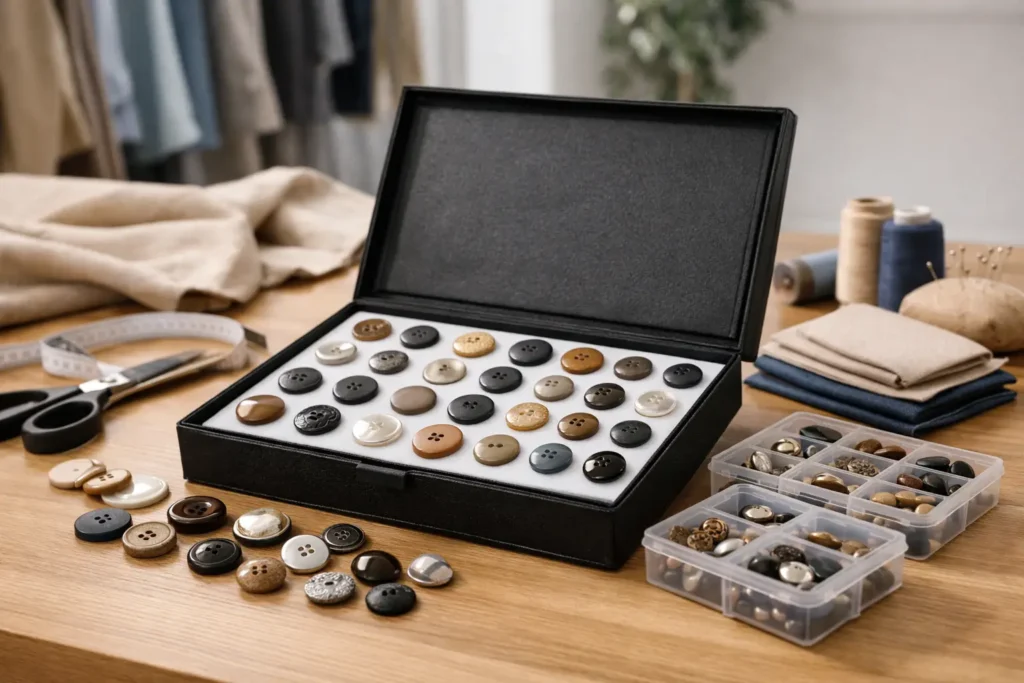
A button can look correct in a digital rendering and still fail on the garment. The hole position may sit too close to the edge, the plating may look different under retail lighting, or the button weight may pull a lightweight placket out of shape. A professional fashion button sampling service gives apparel teams a practical way to identify those issues before a bulk purchase order is released.
For clothing brands, garment factories, and sourcing companies, sampling is not simply a presentation step. It is a production control step. The approved sample becomes the physical reference for material, color, logo detail, dimensions, finish, and workmanship throughout mass production.
Why Button Sampling Deserves Early Attention
Buttons influence both the appearance and the performance of a garment. On a tailored jacket, a horn-effect or corozo button can reinforce a premium positioning. On workwear, a durable resin or metal button may need to withstand repeated washing, abrasion, and frequent handling. For uniforms, stable color and reliable attachment matter as much as appearance.
The challenge is that a button is a small component with many variables. Diameter, thickness, rim profile, hole size, shank construction, logo depth, material density, and surface finish all affect the final result. Changes that appear minor on a specification sheet can be highly visible when buttons are installed across an entire garment front.
Sampling allows the product development team to assess the actual component rather than make decisions based on photographs or material swatches alone. It also gives the button factory a confirmed standard before tooling, raw material preparation, and production scheduling begin.
What a Fashion Button Sampling Service Should Confirm
A useful sample program should produce more than one attractive button. It should help the buyer make a confident production decision. The sample needs to reflect the intended bulk specification as closely as possible, while clearly identifying any development-stage limitations.
Material and visual character
Material selection should be evaluated on the physical sample. Resin buttons can offer broad color flexibility, custom patterns, and consistent molding. Corozo brings a natural grain and is often selected for better-quality apparel. Horn, ceramic, metal, recycled materials, and specialty composites each create a different hand feel, weight, and visual identity.
A fashion brand may want a button that looks handcrafted, while a uniform supplier may prioritize repeatability and wash performance. Neither choice is automatically better. The correct material depends on garment category, target price, care requirements, and the expected production volume.
Color matching and surface finish
Color is one of the most common reasons for sample revision. A button may need to match a garment fabric, contrast with it intentionally, or follow a brand’s seasonal color direction. The factory should work from a physical color reference, approved standard, or clear color target whenever possible.
Surface finish deserves the same attention. Matte, polished, frosted, brushed, antique, pearlized, marbled, and coated finishes react differently to light. Metal buttons may require plating color and protective coating review. Resin and polyester buttons may require confirmation of translucency, pattern distribution, or edge polishing. Samples should be checked under the lighting conditions relevant to development and quality inspection, not only in a showroom.
Size, construction, and garment compatibility
A button dimension should be tested on the actual garment. The nominal size may be correct, but the button can still be too heavy for the fabric, too thick for the buttonhole, or too sharp around the edge for the intended use. For shank buttons, the shank height and opening need to work with garment thickness and sewing equipment.
For sew-through buttons, hole diameter and spacing affect both machine sewing and the finished stitch appearance. A four-hole button may be visually right but inefficient if the garment factory’s automated equipment is set up for a different hole pattern. Reviewing samples with the garment manufacturer early prevents avoidable production adjustments later.
Logos, artwork, and custom details
Custom buttons often carry a logo, monogram, crest, or unique texture. Sampling is where artwork is tested for legibility and proportion. A logo that looks sharp at 25 mm may lose detail at 15 mm. Deep engraving can add character, but it can also collect finishing material or reduce clarity in small lettering.
When a custom mold is required, the sample stage should confirm the final artwork, mold structure, and acceptable detail level before production tooling is finalized. Buyers should provide vector artwork when available and identify non-negotiable brand elements, such as logo orientation, letter spacing, and symbol placement.
From Design Brief to Approved Button Sample
An efficient sampling process begins with a complete brief. The more specific the input, the faster the factory can recommend suitable materials and manufacturing methods. At minimum, the buyer should provide the button type, size, target quantity, intended garment, color reference, artwork, and preferred finish.
Reference photos are helpful, but they should not be the only source of information. A photo may not show thickness, backside construction, exact color, or material composition. If the goal is to match an existing button, sending a physical reference is usually the most reliable approach.
The factory then reviews feasibility. This is where manufacturing experience matters. A requested effect may be possible in resin but unsuitable for corozo. A very fine logo may require a larger diameter or a different decoration method. A plated metal finish may need an alternative base material to meet durability expectations. Honest feedback at this stage protects the buyer from approving a concept that cannot be repeated consistently at scale.
After the initial sample is produced, it should be reviewed against the garment and technical requirements. If revisions are needed, the team should document them precisely. “Make it darker” leaves too much room for interpretation. “Change from warm charcoal to neutral black, reduce gloss, and deepen the logo engraving” gives the supplier a usable revision instruction.
At NZXTRIM, sample development is treated as the bridge between design intent and controlled bulk manufacturing. The goal is to help customers approve a button standard that can be produced consistently across their order quantity.
How to Evaluate Samples Before Bulk Approval
The best review happens with the button attached to the actual garment fabric or a close production equivalent. Place the sample alongside trims, labels, zippers, and thread colors to assess the complete visual balance. A button that looks premium in isolation can appear overly bright, too formal, or too heavy once combined with the rest of the garment.
Product teams should also consider performance. For washable apparel, test the sample through the expected care process where practical. For metal buttons, inspect for scratching, plating changes, and edge wear. For natural materials, confirm whether variation is acceptable and whether it supports the brand’s intended look. Natural corozo and horn-effect products may show character from piece to piece, while molded resin is generally selected when tighter visual uniformity is required.
Bulk approval should be based on a retained approved sample and a written specification. This reference should state the material, size, color, finish, hole or shank type, logo treatment, and any approved tolerances. It gives purchasing teams, garment factories, and quality inspectors one shared standard.
Sampling Decisions That Reduce Production Risk
A fast sample is valuable, but an incomplete sample can create larger delays later. When launch timing is tight, buyers may choose a readily available base button and customize color or finishing rather than begin with a completely new mold. This can reduce development time, though it may limit the uniqueness of the design.
For a signature collection or long-term core program, investing in custom tooling may be the better decision. It gives the brand stronger differentiation and greater control over proportions, logos, and construction. The trade-off is that tooling approval requires more attention upfront and should be supported by realistic volume planning.
MOQ also affects the sampling approach. Smaller runs may be best suited to existing shapes, stock materials, or adaptable decoration methods. Larger orders can justify more specialized molds, finishes, and process controls. A capable button manufacturer should explain these options clearly instead of pushing every project toward the same solution.
Build the Sample Into Your Production Plan
Button sampling should be scheduled alongside fabric approval and garment fitting, not added after the main development decisions are complete. Early alignment gives designers room to refine the look and gives purchasing teams time to confirm cost, MOQ, and delivery requirements.
When the sample is approved, keep the approved reference protected and accessible. It is not just a development artifact. It is the benchmark that helps maintain quality from the first production batch through future reorders.
A well-made button sample does more than confirm a trim. It gives every team involved in the garment a clear, physical standard to produce against, helping the finished collection arrive with the intended quality, identity, and consistency.