
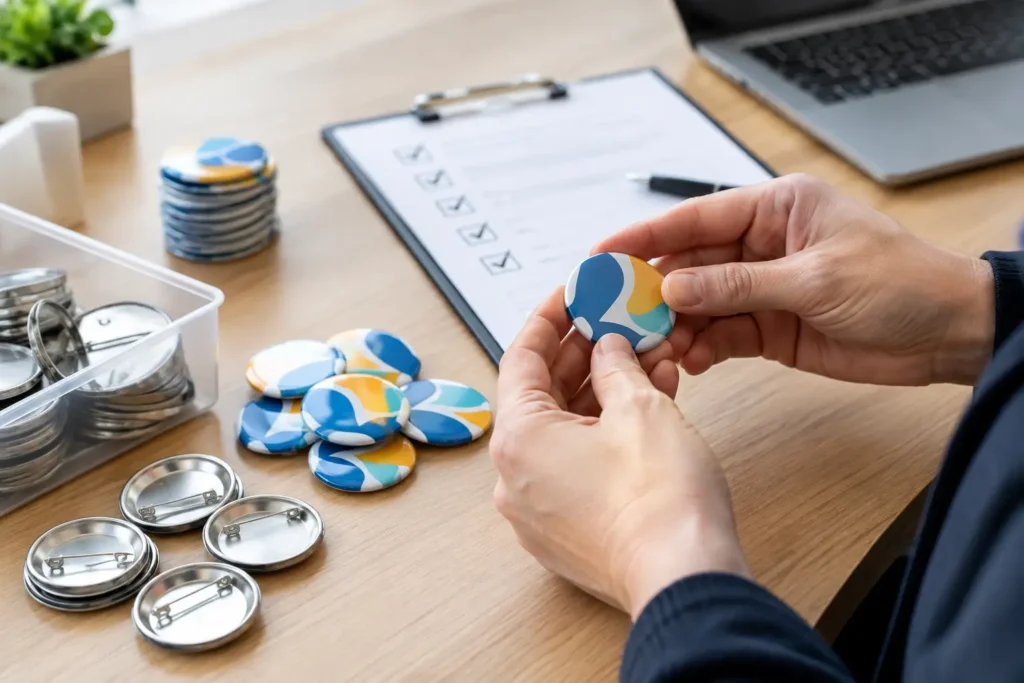
An approved button sample is not automatically ready for bulk production. It may prove that a design looks right, but it does not always define the tolerances, material variation, packing method, approval points, or order-level controls needed to repeat that result at scale. A production readiness review closes that gap before a custom button order moves into bulk manufacturing.
For apparel teams, this review is where a visual concept becomes a usable production specification. It should answer practical questions: Which sample is the master reference? What variation is acceptable across lots? Will the button work with the garment fabric, buttonhole, attachment process, washing requirement, and shipping plan? If those answers remain informal, quality decisions are likely to move downstream, where changes cost more and delivery options narrow.
What a production readiness review should confirm
A production readiness review is a structured check of the approved button design, production specification, and order conditions before bulk work begins. It is not simply a final look at the artwork. It connects the button to the garment program and identifies what must be controlled during manufacturing.
The starting point is an approved physical sample, not only a render, reference image, or digital logo file. Physical samples show details that visual concepts cannot fully establish: surface feel, edge definition, shine level, engraving depth, color perception, hole finish, and the relationship between the button and garment fabric. For natural materials such as corozo, horn, shell, and wood, the sample also helps set realistic expectations for grain, tone, and natural markings.
The review should then confirm the production specification. This normally includes material, size or Ligne, thickness, construction, hole type or shank format, finish, logo method, color reference, packing requirement, order quantity, and delivery requirement. A short description such as “20 mm brown logo button” leaves too much open. A production specification needs to distinguish, for example, a two-hole dyed corozo button with a recessed logo from a resin button in a matched Pantone reference with a raised rim and four sew holes.
Start with the garment, not the button alone
A button can meet its own approved sample and still create a garment production problem. The review should consider how it will be used, including buttonhole size, placket thickness, sewing method, reinforcement, press or wash process, and the intended garment category.
A heavy metal shank button may suit an outerwear sample but require different attachment planning for a lightweight woven shirt. A large four-hole button can look balanced on a front placket yet be difficult to pass through a tight buttonhole if the garment pattern changes after trim approval. Similarly, a ceramic, shell, or natural-material button may need more careful handling assumptions than a standard molded resin construction.
This does not mean every program needs a complex validation process. The depth of review depends on the material, construction, order volume, garment use, and level of change from the approved sample. A repeat order with an unchanged specification may need a focused confirmation. A new logo construction, revised finish, or new dye color should receive a fuller review before bulk release.
Material variation must be agreed, not discovered later
Material selection affects both appearance and repeatability. Resin and many metal constructions can provide relatively controlled visual consistency when the agreed specification is maintained. Natural materials offer character, but may show variation in grain, tone, texture, or markings. That variation can be desirable for a premium or organic visual direction, but it should be accepted deliberately by the product team.
The same principle applies to dyed or plated finishes. A Pantone reference is a useful target, yet the final visual result can vary with substrate, texture, gloss level, lighting, and production lot. A matte corozo surface and a polished resin surface will not reflect the same color in the same way. The review should identify the reference standard and the acceptable direction of variation rather than assume a paper color reference alone resolves the issue.
If recycled content, sustainability attributes, material origin, or a particular performance claim matters to the garment program, it should be confirmed for the exact button material, order, and supply route. These points should not be inferred from a general material description.
Lock the master sample and critical details
The strongest readiness reviews establish one clearly identified master sample. This is the physical reference against which key visual and construction details are judged. It prevents a common problem: different teams comparing bulk goods with different sample rounds, each containing small changes.
The master sample should be tied to the confirmed specification and, where relevant, the approved artwork or logo file. For branded buttons, small details are often the first source of disagreement in bulk review. Letter spacing, icon placement, line weight, engraving depth, orientation, and the position of a shank or sew holes all need attention.
Logo method should be reviewed against both the design and the chosen material. Engraving, debossing, embossing, laser marking, printed treatment, and cast or molded logo details can produce very different effects. Fine artwork that reads clearly on a flat digital image may soften, fill in, or become less visible once applied to a small curved button surface. Tooling may be needed for certain shapes, borders, logo treatments, or custom constructions, so the readiness stage should confirm whether the approved sample reflects final tooling conditions.
Define what will be checked during bulk production
A production readiness review is most useful when it creates clear inspection priorities. These are not generic quality statements. They are the attributes most likely to affect the garment program or cause a reject decision.
For a custom button, the priorities may include size, thickness, hole diameter, shank formation, color range, logo clarity, plating or surface finish, edge condition, back appearance, and packing count. The relative importance changes by project. For a uniform program, shade consistency and supply repeatability may be central. For a fashion collection with a natural horn look, controlled material character may be acceptable while logo placement and size remain critical.
The review should also clarify the inspection sample basis and acceptance approach required by the buyer or garment factory. If there are buyer-specific test, restricted-substance, or certification requirements, the scope, timing, and applicable documentation need to be agreed before production. Requirements cannot be assumed to apply equally across corozo, metal, shell, resin, wood, or specialist materials.
Review quantity, overage, and packing as production decisions
Button quantity is more than a purchase order line. The order should account for buttons per garment, style sizes, contingency requirements, approved overage policy, and the pack format used by the sewing floor. A factory receiving mixed sizes, unclear carton labels, or inconsistent polybag counts can lose time even when the buttons themselves are correct.
Packing should identify whether buttons are supplied loose, bagged by color and size, carded, or packed to another agreed format. The correct solution depends on the customer’s receiving process and the risk of finish damage in transit. Highly polished metal, shell, ceramic, and certain coated surfaces may need different protection considerations from standard dyed resin buttons.
Delivery planning belongs in the same conversation. Material availability, custom tooling, sampling iterations, finishing steps, inspection requirements, bulk quantity, and shipping method can all affect the workable production schedule. A requested delivery date is useful, but it must be assessed against the actual approved specification and order conditions. Releasing bulk work before these inputs are stable can create avoidable changes later.
Common gaps that delay bulk approval
Most readiness issues come from incomplete decisions rather than unusual technical failures. The recurring gaps are an approval sample without a written construction, a Pantone reference without a finish reference, artwork approved at a large scale but not evaluated on the final button size, and a button selected before the garment buttonhole or attachment method is confirmed.
Another frequent issue is treating a development sample as proof of full bulk feasibility. A hand-finished or early sample can be valuable for design approval, but bulk production may use defined tooling, finishing, and inspection processes that need their own confirmation. The question is not whether the sample is attractive. The question is whether its critical features can be specified and repeated for the order.
A clear change-control process also matters. If the brand revises the logo, color, size, material, or construction after approval, the impact on tooling, sampling, timing, and cost should be reviewed before the change is released. Small trim changes can have larger production consequences than they appear to have on a tech pack.
Make the review a release point, not a meeting
The output of a production readiness review should be a release package that both the buyer and manufacturer can use: the master sample reference, confirmed specification, approved artwork where applicable, order quantity and packing details, inspection priorities, and any project-specific requirements. It should be clear which points are final and which, if any, remain open.
For international apparel programs, this discipline helps product development, sourcing, garment manufacturing, and trim production work from the same instruction. NZXTRIM can review these details during custom button development so sampling decisions are carried into the bulk specification rather than left to interpretation.
The best time to resolve a button question is when a revised sample or specification is still easy to issue. Treat the production readiness review as the point where design intent becomes a controlled manufacturing instruction, and bulk production has a far better chance of supporting the garment schedule.