
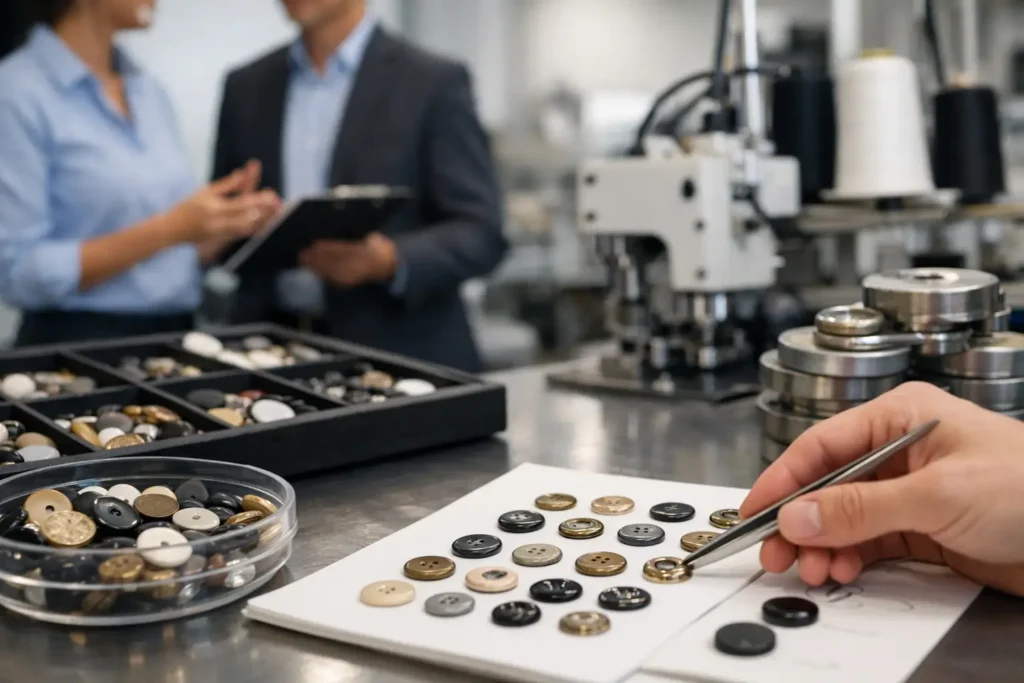
A button can be the first detail a customer touches, notices, or questions. For apparel teams, selecting a button OEM manufacturer is therefore not a minor trim decision. The right factory helps translate a design direction into a repeatable component that matches the garment, supports the target price, and arrives consistently across every production run.
A suitable manufacturing partner must do more than supply a catalog item. It should understand how material, mold construction, color, finish, attachment method, and inspection standards affect the final garment. This matters whether you are developing a small premium collection, a uniform program, or a high-volume fashion order.
Start With the Button’s Job on the Garment
Before contacting factories, define what the button needs to do. A decorative front button for a lightweight blouse has different requirements from a four-hole workwear button, a washable uniform shank button, or a logo button for a luxury coat. The garment fabric, expected use, laundering method, season, and selling price all influence the correct specification.
Material selection is often the first decision. Resin buttons offer wide color flexibility and are suitable for many fashion applications. Corozo brings a natural grain and a premium appearance, while horn can provide distinctive organic variation for elevated garments. Metal buttons can add structure and branding impact, but their plating, weight, corrosion resistance, and attachment construction require close attention. Ceramic and specialty materials may be appropriate when the collection calls for a more unusual surface or tactile quality.
A good manufacturer will discuss trade-offs early. A material that looks excellent on a sample card may be too heavy for the fabric. A bright plated finish may need additional testing for repeated washing. Natural materials can vary from piece to piece, which may be desirable for some brands but unsuitable for a tightly controlled uniform program.
What a Button OEM Manufacturer Should Handle
The strongest OEM relationships begin with a clear development process. Your factory should be able to work from a sketch, reference sample, technical pack, logo file, or physical garment swatch, then identify the production details needed to make the design manufacturable.
For custom buttons, this generally includes mold development, size confirmation, hole or shank construction, logo engraving, color matching, surface finishing, and packaging requirements. It also includes practical advice on whether a proposed feature can be produced efficiently at the required quantity.
Custom molds and brand details
A custom mold is often necessary when the button has a unique profile, edge shape, raised logo, recessed emblem, or nonstandard back construction. Mold development adds time and initial cost, but it gives brands better control over product identity and reduces the risk of using a trim that looks generic or is easily substituted.
Ask how the factory manages mold ownership, storage, maintenance, and future reorders. A reliable supplier should retain approved specifications so repeat orders do not depend on memory, old emails, or a single physical sample.
Color matching and finishing
Color should be reviewed under appropriate lighting and against the actual garment fabric whenever possible. A button color can appear different beside cotton, wool, denim, or synthetic blends. For dyed or molded materials, confirm the acceptable shade range and whether the factory can provide a lab sample before bulk production.
Finishing deserves the same attention. Matte, polished, sanded, antique, brushed, pearlescent, laser-marked, and plated surfaces each create a different brand impression. They also perform differently in handling and washing. The goal is not simply an attractive sample. It is a finish that can be repeated across the entire order.
Evaluate Sampling Before You Judge Price
Price comparisons are useful only when each supplier is quoting the same material, size, finish, logo method, inspection level, packaging, and delivery terms. A low quote can hide substitutions that become visible only after bulk buttons reach the sewing line.
Sampling is where a factory’s communication and technical discipline become clear. The supplier should confirm the artwork, dimensions, material, color reference, quantity, and expected approval timeline before making samples. If the design contains potential production risks, such as fine logo lines, deep cavities, thin shanks, or very specific color effects, those concerns should be raised before tooling begins.
Review samples on the actual garment rather than in isolation. Check whether the button balances visually with the fabric, passes through the buttonhole correctly, sits flat, and feels appropriate in the hand. For shank buttons, confirm that the shank has enough clearance for the fabric thickness. For four-hole buttons, inspect hole size, edge smoothness, and sewing compatibility.
Sample approval should become a controlled production reference. Keep approved buttons, artwork versions, color standards, and inspection notes together. This creates a dependable baseline for future reorders and helps prevent avoidable variation when multiple styles are in development.
Confirm Capacity, MOQ, and Production Planning
A button OEM manufacturer should match your order profile, not just your current sample request. Some factories are well suited to development quantities and boutique runs. Others are optimized for large-volume production. Many apparel businesses need a partner capable of supporting both as a collection grows.
Discuss minimum order quantities by material and process. Custom tooling, specialty plating, and uncommon colors may require higher minimums than standard resin shapes. Ask whether MOQ applies per color, per size, per design, or across a combined order. These details can significantly affect the cost of a multi-style collection.
Production timing should include more than the quoted bulk lead time. Build in time for artwork confirmation, mold creation, sampling, revisions, material preparation, production, inspection, packing, and international shipment. If your garment factory has a fixed sewing schedule, communicate the trim delivery deadline rather than only the desired ship date.
NZXTRIM supports OEM and ODM button development from concept and prototype through bulk production, helping customers coordinate material choices, custom details, and delivery requirements before production begins.
Look Closely at Quality Control
Buttons are small, but their defects are highly visible. Scratches, uneven plating, sharp edges, poorly formed holes, inconsistent logo depth, color variation, and weak shanks can affect garment quality and create costly sorting work at the factory.
Ask how the supplier checks incoming materials, first-off samples, in-process production, and final packed goods. The inspection method should reflect the button type. Metal buttons may require checks for plating consistency, burrs, corrosion resistance, and attachment strength. Resin buttons may need close review for shade consistency, flash, cracks, and surface defects. Natural materials should be assessed against agreed standards for variation, thickness, and finish.
For performance-sensitive programs, discuss testing requirements early. Depending on the garment and market, this may include wash testing, dry-cleaning evaluation, salt spray testing for metal finishes, pull testing for shanks, colorfastness review, or restricted-substance compliance. A factory cannot apply the correct standard if it receives those requirements after bulk production is complete.
Quality control also depends on clear acceptance criteria. Define what is acceptable for natural variation, logo placement, color tolerance, surface marks, and packaging count. This is especially valuable when sourcing companies, garment factories, and brand teams are all approving the same trim from different locations.
Communication Is Part of Manufacturing Reliability
The best factory relationship is built on accurate information moving in both directions. Buyers should provide clear artwork, reference samples, quantities, delivery targets, and intended end use. Manufacturers should respond with practical questions, realistic lead times, written specifications, and early warnings when a design may affect cost or production stability.
Pay attention to how a supplier handles revisions. Fast replies are useful, but precise replies are more valuable. A dependable manufacturer confirms changes in writing and makes sure revised artwork, samples, and production instructions remain aligned. This reduces the risk of approving one version while producing another.
For global orders, clarify packing method, carton labels, shipping documentation, export support, and delivery responsibilities. Buttons are compact, but incorrect packing quantities or unclear labels can still delay garment production. Good supply-chain support means the trim arrives organized, identified, and ready for the next stage of manufacturing.
Choose a Partner for Reorders, Not One Purchase
A button may represent a small portion of a garment’s cost, yet it can have an outsized effect on perceived value and production continuity. The right supplier is one that can preserve the approved standard as your colors, quantities, and seasonal collections change.
When evaluating a button OEM manufacturer, focus on evidence: sample quality, technical communication, material knowledge, documented controls, realistic capacity, and a clear approach to repeat orders. The strongest choice is rarely based on price alone. It is the factory that can make your button look right on the first garment, stay consistent through bulk production, and remain dependable when the next order matters even more.