
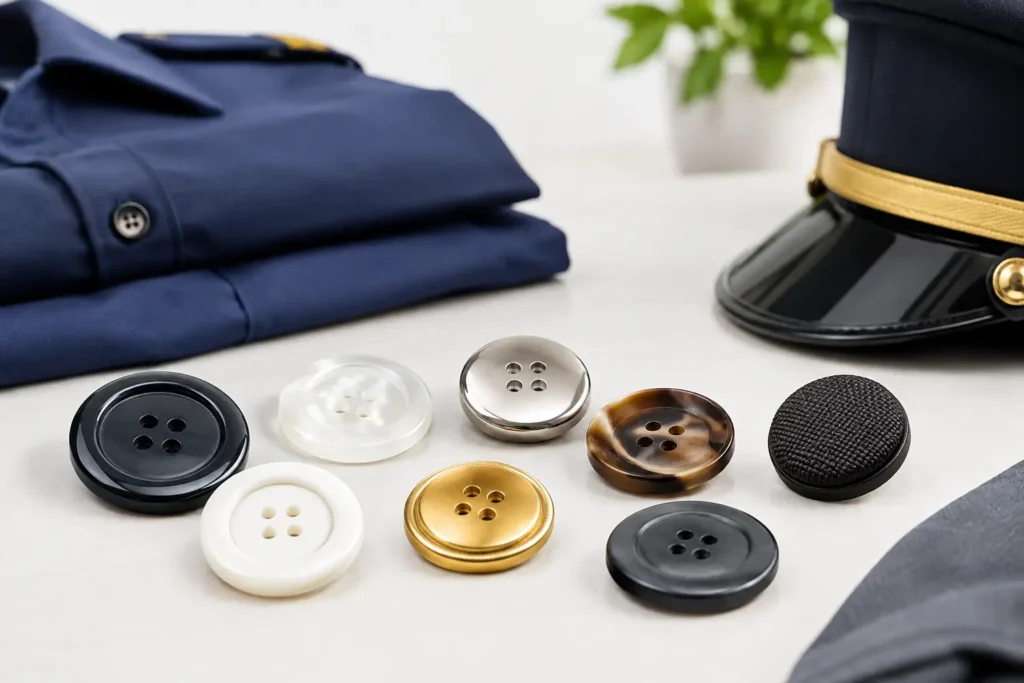
Selecting the best button materials for uniforms is not a styling decision alone. A button that looks correct on an approval sample can still become a production issue if its finish changes after repeated laundering, its construction does not suit the garment weight, or the replacement supply is not controlled. For uniform programs, the right choice starts with the garment’s working conditions, care method, expected service life, and branding requirements.
A practical specification should define more than the button material. It should also cover size, Ligne, thickness, hole or shank construction, color standard, finish, logo method, attachment method, and approved sample reference. That level of detail helps a brand, garment factory, and button supplier make consistent decisions before bulk production begins.
Best Button Materials for Uniforms by Application
There is no single best material for every uniform. A hotel front-desk jacket, a school polo, a restaurant chef coat, and an industrial work shirt face different conditions. Material selection should reflect where the garment is worn and how it will be maintained.
Polyester resin for consistent color programs
Polyester resin is often a practical starting point for uniforms requiring a wide color range, repeatable shapes, and a controlled visual appearance. It can be developed in solid colors, translucent effects, marbling, horn-look patterns, and other visual treatments. This makes it useful where a uniform program requires buttons aligned to brand colors or garment fabric shades.
For corporate apparel, hospitality uniforms, schoolwear, and service garments, polyester resin can offer a good balance of design flexibility and production scalability. It is available in common sew-through and shank constructions, with options for molded logos, engraved details, or laser marking depending on the intended effect.
The trade-off is that a Pantone reference is not automatically a final production standard. Surface texture, button thickness, base material, gloss level, and manufacturing batch can affect perceived color. A physical color chip or approved button sample should be retained as the production reference.
Metal for tailored uniforms and premium identity
Metal buttons suit blazers, security uniforms, ceremonial garments, outerwear, and premium hospitality programs. They provide weight, definition, and a more formal surface than most molded materials. Metal is also appropriate when a logo, crest, rim detail, or custom relief pattern is central to the uniform identity.
Common development decisions include the metal base, plating appearance, antique or polished finish, button back construction, and whether the logo is embossed, debossed, engraved, or filled with color. These choices affect both appearance and tooling requirements.
Metal is not automatically the right choice for every washable uniform. The selected construction must suit the garment care process and attachment method. A heavy button can pull lightweight fabric, while a raised emblem may create abrasion concerns in tightly packed laundry. Sampling should include the actual garment fabric and, where possible, the intended attachment thread and sewing process.
Corozo for natural-looking tailored programs
Corozo is used when a uniform program needs a refined, natural appearance rather than a high-gloss molded look. Its organic grain can give blazers, knitwear, overshirts, and premium staff apparel a distinctive finish. It can also be dyed and engraved for branding.
Because corozo is a natural material, visual variation is part of its character. That can be valuable for a design-led program, but it should be discussed early if the buyer expects every button to look identical. Color consistency, grain visibility, and engraving contrast should be approved against physical samples rather than digital artwork alone.
Corozo may be a suitable choice for uniforms with a more elevated presentation, but the planned care routine and target appearance should guide final approval. Material availability and development requirements should be confirmed for the specific order.
Nylon and practical molded constructions
For lightweight uniforms, nylon and other engineered molded button options can be useful where function matters more than decorative detail. They are commonly considered for work shirts, medical-style apparel, casual service uniforms, and garments where low weight is preferred.
A molded construction can support clean, repeatable shapes and can be developed in sew-through or shank styles. The material is especially worth considering when the garment needs a simple, low-profile button with limited logo detail.
The design limitation is usually visual depth. A nylon button may not deliver the same crisp metal relief, natural variation, or layered color effect available from other materials. If branding is subtle and garment performance is the priority, that limitation may be acceptable.
Match Construction to the Garment, Not Just the Button Face
Button material is only one part of uniform performance. Construction determines how the button sits on the garment and how easily the factory can attach it consistently.
Sew-through buttons are commonly used on shirts, polos, chef coats, and washable workwear. Two-hole and four-hole versions are familiar to garment factories and can sit flat against the fabric. Four-hole construction can offer a more stable sewing pattern on heavier garments, while two-hole styles may support a cleaner visual direction.
Shank buttons are often selected for blazers, coats, and structured uniforms because they create space between the button face and fabric. That space can improve closure on thicker cloth, but the shank type must be appropriate for the button weight and garment use. A custom shank button should always be reviewed on the intended fabric, not only as a loose trim sample.
Size should also be specified in both millimeters and Ligne where relevant. A common shirt button may be around 16L to 20L, while jacket fronts often require larger sizes. Exact sizing depends on the buttonhole, placket construction, garment scale, and design standard. Do not select size from a reference image alone.
Branding Methods Need Production Review
Uniform buyers often request a logo button because it strengthens brand recognition across a large staff program. The production method should be chosen according to the material and the level of detail in the artwork.
Embossed or debossed logos work well where the design can be simplified into clear raised or recessed areas. Engraving and laser marking may suit selected materials and can create more subtle branding. Printed color fills may be possible for some designs, but fine lines, small text, and multi-color artwork should be assessed at the actual button diameter.
A logo that reads well at 40 mm may not remain clear at a 15 mm shirt button. This is why production-ready artwork differs from a visual concept. The supplier should review line thickness, spacing, edge definition, and the relationship between logo scale and button size before tooling or sample approval.
Sampling Should Replicate the Real Uniform Program
A button sample is most useful when it answers a production question. It should confirm the correct material, color direction, finish, construction, size, logo treatment, and fit on the garment. For a multi-garment uniform collection, assess each button size and placement rather than approving one button as a universal substitute.
NZXTRIM can develop physical samples for review before bulk production, helping product teams move from reference images and artwork to a defined button specification. The most effective sample request includes the button drawing or reference, diameter, thickness target, material preference, color reference, logo file, estimated order quantity, garment type, and required delivery window.
If an existing button is being matched, submit a physical reference whenever possible. Photographs can show the general direction, but they do not reliably communicate weight, edge profile, depth, surface texture, or exact finish.
Plan for Replacement and Reorder Consistency
Uniform programs often run longer than a seasonal fashion collection. New hires, replacement garments, and regional rollouts can create repeat orders well after the first bulk shipment. This makes documentation especially valuable.
Keep an approved reference sample, material description, size and thickness record, color reference, logo artwork version, tooling status, and packing requirement. If the button is part of a branded jacket or formal uniform, record the plating or finish description in clear language rather than relying only on a photo.
MOQ, tooling, sampling stages, bulk timing, and delivery planning should be confirmed for each material and order. They can vary based on construction, custom logo requirements, color development, and production scheduling. Early specification reduces avoidable changes when the garment factory is ready to start sewing.
The best uniform button is the one that fits the garment’s use, carries the right level of brand detail, and can be repeated against an approved physical standard. Start with the actual wearing and care conditions, then develop the material and construction around that reality.