
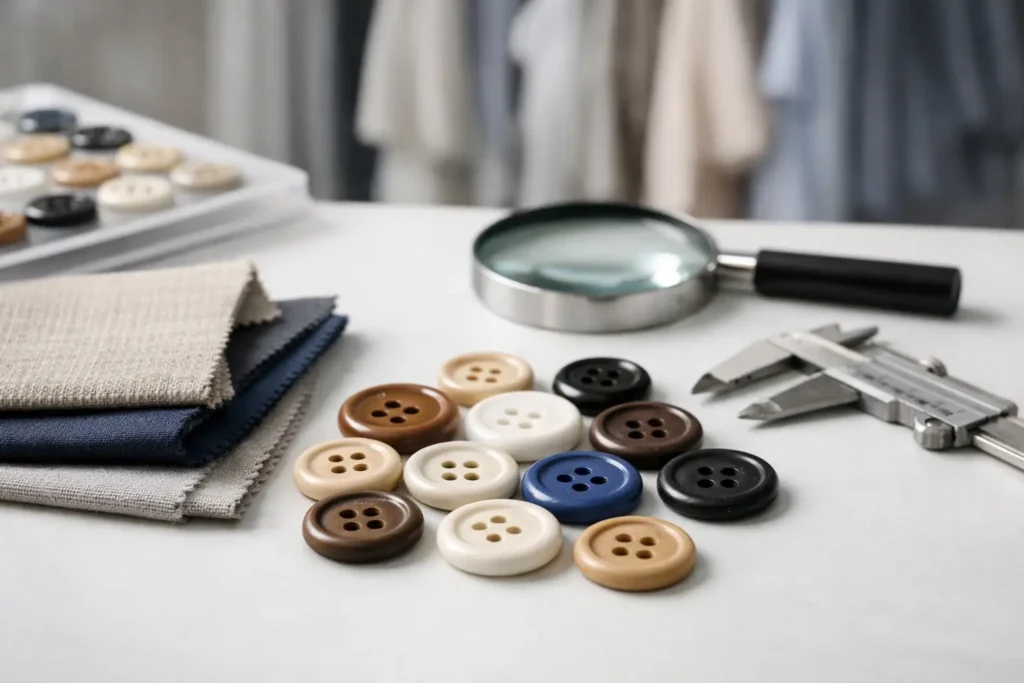
A ceramic button supplier is not simply a source of decorative fasteners. For apparel brands, garment factories, and sourcing teams, the supplier must translate a design direction into buttons that can be produced consistently, attached efficiently, and delivered on schedule. Ceramic has a distinctive weight, surface character, and premium visual presence, but it also requires material knowledge and disciplined production control.
Ceramic buttons can turn an otherwise simple garment into a recognizable product. A glossy porcelain-style button may suit a refined women’s blouse, while a matte, textured ceramic finish can add an artisanal detail to outerwear or designer knitwear. The right result depends on much more than selecting a color from a chart. It depends on how the button is formed, fired, glazed, inspected, and packed for shipment.
What a Ceramic Button Supplier Should Control
Ceramic button manufacturing involves a sequence of processes where small variations can affect appearance and performance. A dependable supplier should control the process from raw material selection through final packing, rather than treating ceramic buttons as a standard off-the-shelf trim.
The process typically begins with a clay-based ceramic body selected for the intended look, size, and firing method. The material is shaped through molding, pressing, casting, or other production methods appropriate to the design. Holes, shanks, logo details, and edge profiles must be formed accurately before firing because corrections after firing are limited.
During kiln firing, ceramic shrinks and hardens. This is one reason ceramic button development requires careful tolerance planning. A 20 mm button design may not remain exactly 20 mm after firing unless the mold and firing shrinkage have been calculated correctly. Suppliers should understand how body composition, button thickness, glaze, and firing temperature affect the final dimensions.
Glazing and surface finishing then determine much of the button’s character. Options may include high gloss, satin, matte, crackle-style effects, speckled finishes, hand-painted details, or custom color glazes. A good finish is not only attractive. It should be even across the production lot, free from excessive pinholes or glaze defects, and appropriate for the garment’s intended use.
Ceramic Buttons Need Design Decisions Early
A ceramic button has different design limits than a resin, metal, or corozo button. Buyers who involve the supplier early can avoid delays during sampling and prevent designs that are difficult to produce at scale.
Button thickness is a practical starting point. Very thin ceramic buttons may look refined, but they can be more vulnerable to breakage during sewing, garment finishing, packing, or wear. A thicker profile generally provides better strength, although it also adds weight. For lightweight shirts and blouses, the balance between visual delicacy and practical durability matters. For coats, overshirts, and heavier fashion garments, a larger or thicker ceramic button may be more suitable.
Attachment style also deserves attention. Two-hole and four-hole ceramic buttons are familiar options for apparel production, while shank buttons can create a more elevated appearance and improve movement on thicker fabrics. The shank must be securely integrated into the button design. If a garment will be machine sewn at high volume, buyers should confirm that the hole diameter, hole edges, and button profile work with their sewing equipment.
Logo customization is possible, but fine lettering, shallow artwork, and highly detailed graphics must be reviewed realistically. Ceramic firing can soften very small features or alter the clarity of fine engraving. A manufacturer should assess the artwork and recommend suitable line widths, depth, and placement before mold development begins.
Sampling Is Where Supplier Capability Becomes Visible
A ceramic button supplier should provide a clear sampling path before bulk production. A digital rendering or reference photo is useful, but it cannot fully show the final weight, glaze depth, color behavior, or hand feel of a fired ceramic button.
The first development sample may reveal that a requested color needs adjustment after firing, that a logo needs deeper relief, or that a button edge requires a smoother profile. These are normal development findings. What matters is whether the supplier documents the changes, communicates realistic timing, and carries approved specifications into mass production.
For custom projects, buyers should provide the intended button size, garment type, attachment method, reference samples if available, target quantity, and required delivery date. Pantone references can support color development, but ceramic glaze colors should be evaluated on actual fired samples. The same formula can appear different depending on glaze thickness, kiln conditions, and surface texture.
Approval should cover more than color. Review the diameter, thickness, hole position, shank strength if applicable, back finish, weight, edge smoothness, and overall consistency. If the garment will be washed, dry cleaned, pressed, or exposed to abrasion, the supplier should understand those conditions before confirming the production specification.
Quality Control for Bulk Ceramic Button Production
Ceramic buttons are premium trims, but premium appearance only has value when it is repeated across thousands of pieces. Bulk quality control should focus on both visual consistency and functional suitability.
Dimension checks help confirm that buttons remain within agreed tolerances after firing. This is especially important when buttons must fit existing buttonholes or automated sewing processes. Color comparison should be performed against the approved sample under suitable lighting, since glaze variation can become more visible across a full garment or between production lots.
Visual inspection should identify chipped edges, cracks, glaze unevenness, pinholes, distorted holes, and surface contamination. Functional checks can assess hole clarity, shank security, and whether the button sits properly on fabric. Packing is equally important because ceramic buttons can be damaged when loose pieces strike one another during transport. Divided trays, protective bags, and suitable carton packing help protect the order from factory to destination.
It is also wise to discuss the acceptable quality standard before production starts. No handcrafted or kiln-fired material is completely identical, and some ceramic finishes intentionally include natural variation. For a clean, uniform fashion button, tolerance for variation should be tighter. For an artisanal collection, slight tonal or texture differences may support the intended aesthetic. The supplier and buyer should agree on which variations are acceptable rather than making assumptions after goods are finished.
Choosing a Ceramic Button Supplier for Your Supply Chain
The best supplier is not always the one offering the lowest unit price. Ceramic button pricing depends on size, shape, mold requirements, glaze complexity, decoration, production quantity, inspection level, and packing method. A lower initial quote can become costly if it results in high breakage, inconsistent colors, repeated sampling, or delayed garment production.
For purchasing managers and sourcing companies, production capacity matters as much as craftsmanship. Ask whether the factory can support your required MOQ, handle repeat orders, retain approved samples or production standards, and schedule manufacturing around your garment calendar. A supplier should be transparent about sample lead times, bulk lead times, and the point at which design changes can affect the delivery schedule.
Communication is another operational requirement. Product developers need clear responses when a design needs modification. Garment manufacturers need accurate packing information and order quantities. Brands need confidence that the button approved during development will match the button delivered for production. An experienced clothing button manufacturer connects these requirements through documented specifications and controlled production steps.
NZXTRIM supports custom ceramic button projects alongside a wider range of fashion button materials, allowing buyers to compare material options when a design requires a different balance of weight, durability, cost, or finish. This can be useful when a collection needs a premium ceramic look for selected styles while using complementary trims across the broader garment range.
Questions to Resolve Before Placing an Order
Before confirming a ceramic button order, buyers should establish the final approved sample, size and tolerance requirements, color reference, attachment style, order quantity, packing method, production timeline, and inspection expectations. These details protect both the buyer and the factory from avoidable misunderstandings.
It is also helpful to consider replenishment at the start of the project. If the garment may be reordered, ask how the supplier will maintain the button specification for future production. Retaining the approved sample, mold information, glaze reference, and quality standard gives repeat orders a much stronger basis for consistency.
A ceramic button should feel intentional when a customer touches the garment. That outcome starts with a design that respects the material and a supplier that can manage every production detail behind it. Request samples early, test them on the actual garment, and approve a specification that your factory can repeat with confidence.