
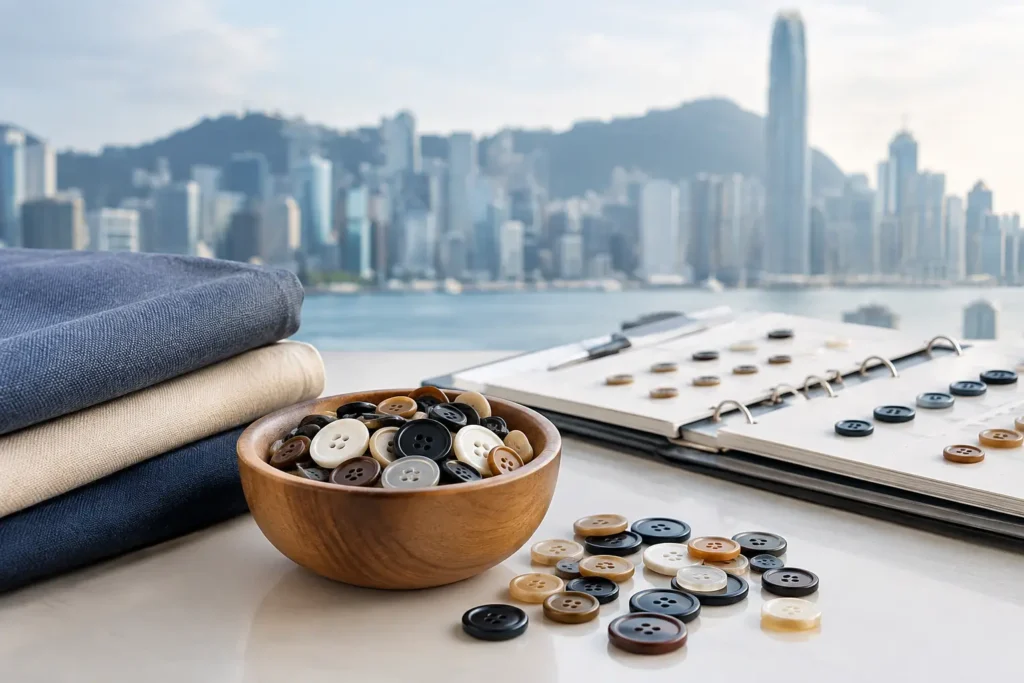
A button can look correct in a presentation sample and still fail as a production component. The difference is usually not the sketch or the logo. It is the specification behind the button: material grade, construction, size tolerance, finish, attachment method, color target, and the conditions it must withstand after sewing. This Hong Kong button sourcing guide is written for apparel teams that need to move from a visual idea to a component that can be sampled, approved, and repeated in bulk.
Hong Kong remains useful as a coordination point for global apparel sourcing because design, buying, factory communication, and shipment planning often need to happen across several markets. For buttons, however, the value is not simply where an inquiry is sent. It is how clearly the project is defined before tooling, sampling, and bulk production begin.
Start the Hong Kong Button Sourcing Process With a Production Brief
A production-ready brief gives the button supplier enough information to assess feasibility rather than merely quote a concept. A reference image is useful, but it does not define a button. It may not show the back construction, edge profile, material density, coating system, hole diameter, or whether a logo is intended to be molded, engraved, debossed, embossed, or laser-marked.
State the garment category first. A shirt button, trouser button, outerwear snap-style button, uniform button, and decorative fashion button face different use conditions. Include the intended position on the garment, the fabric weight, the sewing method, and whether the component will be exposed to laundering, dry cleaning, abrasion, heat, humidity, or salt air. These details influence material and finish selection.
Your brief should also identify the target size in millimeters or Ligne. If the team uses Ligne, confirm the millimeter equivalent so that product development, merchandising, and garment manufacturing are working to the same dimension. Specify whether the button is two-hole, four-hole, shank, stud, toggle, or another construction. For shank buttons, the shank opening and clearance are not minor details. They affect sewing compatibility and the way the button sits on the garment.
A complete brief normally includes the artwork file, logo placement, target quantity by size and color, required delivery window, destination, and any known testing or customer requirements. If the program is still at concept stage, say so. It is better to describe an item as a development sample than to treat early artwork as a final production specification.
Select Material for the Garment, Not Only the Appearance
Material choice drives appearance, cost structure, tooling approach, color behavior, consistency, and performance expectations. The best-looking option in a mood board may not be the most suitable option for the garment program.
Corozo offers a natural, refined surface and can be dyed or finished in different ways. Its natural variation can be part of its appeal, but teams should agree in advance on the acceptable range of shade, grain, and surface character. Horn, shell, and wood also carry inherent variation. They are appropriate where natural appearance is central to the design, but a physical approval standard is especially important because no two pieces will be identical.
Metal buttons can provide weight, definition, and durable-looking finishes, with options such as die-cast, stamped, or assembled constructions depending on the design. The choice affects detail level, back construction, weight, and tooling requirements. A large metal button may look appropriate on a coat but create drape or stress issues on a lightweight garment.
Resin can support controlled color development, molded details, and repeatable shapes. Ceramic creates a distinctive surface and weight but needs careful review for garment suitability and handling requirements. Recycled or specialist materials may be available for certain projects, but recycled content, visual variation, processing limits, and any related claims should be confirmed for the specific material and order rather than assumed from a generic description.
A supplier should help distinguish between a material that resembles the intended look and one that can reliably support the full construction. For example, a deep recessed logo may be practical in molded resin but need a different approach in shell. A Pantone reference may be achievable in a colored resin, while dye response on a natural material may require a tolerance range agreed through physical sampling.
Define Finish, Logo Method, and Color Together
Do not specify these elements separately. A polished metal finish changes how engraved artwork reads. A matte resin surface can make an embossed logo more subtle. Laser marking may create contrast differently across materials and colors. The same logo file can therefore require different line weights, depths, or placement depending on the selected button.
Provide vector artwork where possible, and avoid assuming that extremely fine lines will reproduce at small scale. The supplier should review minimum practical detail after the button size and method are known. Tooling may be required for custom shapes, molded logos, or certain metal constructions. Tooling timing and cost should be discussed before sample approval, particularly when multiple sizes use related but separate tools.
For color, state whether the target is a Pantone reference, an approved swatch, a garment fabric, or an existing trim. Pantone provides a starting point, not an automatic production match across every material. Color should be judged against an agreed physical standard under defined viewing conditions. This matters most for large programs, repeat orders, and garments combining buttons with dyed fabric, labels, or zippers.
Sample Before You Commit to Bulk Production
Sampling is where visual intent meets manufacturing reality. A digital rendering can help explain shape and branding, but it cannot confirm actual hand feel, weight, edge smoothness, color, logo legibility, or sewing behavior. Physical samples are the correct basis for approving a custom garment button.
The sample review should cover more than appearance. Check the size against the specification, hole or shank dimensions, edge profile, logo alignment, back finish, and consistency across the sample set. On sewn garments, assess whether the button sits correctly, passes through the buttonhole, and maintains the intended balance with the fabric.
If the button will be dyed, plated, coated, or assembled, approve a sample that reflects the intended bulk process as closely as practical. A raw development piece may confirm shape but not final finish. Similarly, an early hand-finished sample can communicate a concept without representing the full production method. Record what the sample proves and what remains subject to bulk-process confirmation.
Changes after tooling can be possible, but they may affect cost, timing, or require tool revision. Consolidating artwork, size, construction, and finish decisions before final approval reduces avoidable rework.
Plan MOQ, Lead Time, and Delivery as One Decision
Minimum order quantity is not a universal number for custom buttons. It depends on material, size, construction, number of colors, tooling, finishing process, and whether the order can be grouped with compatible production. A simple stock-style construction and a custom logo button should not be expected to follow the same MOQ logic.
Lead time also needs to be separated into stages: artwork review, tooling where needed, material preparation, sampling, sample approval, bulk production, inspection, packing, and freight planning. An urgent delivery request may be feasible only if the design is already finalized and the selected material or process does not introduce additional development steps. Asking for a target in-hand date is more useful than asking only for a factory completion date.
For repeat programs, retain the approved sample, final artwork version, size chart, color standard, and packing requirements. These records make reorders more controlled, especially where teams change, garment factories shift, or a program expands into additional sizes and colorways.
NZXTRIM coordinates custom button projects from Hong Kong with production support in China, helping apparel teams review material feasibility, develop physical samples, and plan bulk requirements before production is released.
Build Quality Review Into the Purchase Order
Quality review should be linked to agreed specifications, not a general expectation of “good quality.” Define the inspection points that matter to the program. Depending on the button, these may include size, thickness, weight range, hole or shank condition, logo orientation, surface finish, color tolerance, sharp-edge review, assembly security, and packing count.
Where the garment program has test, regulatory, retailer, or market-entry requirements, provide them early. The applicable scope may vary by material, finish, destination, garment type, and supply route. A button supplier can review feasibility and coordinate the information needed for the project, but requirements should be confirmed for the exact order rather than carried over from another style.
A practical purchase order should identify the approved sample date or reference, final artwork revision, material and finish, size, construction, quantity by variant, packing method, required documents, shipment terms, and delivery milestone. If any point is still undecided, flag it rather than leaving it implied.
The strongest button sourcing decisions are usually made before the order is placed: select a material that suits the garment, approve a physical sample that represents the intended result, and document the details that must stay consistent. That preparation gives the production team a clear target and gives your garment program a far better basis for repeatable supply.