
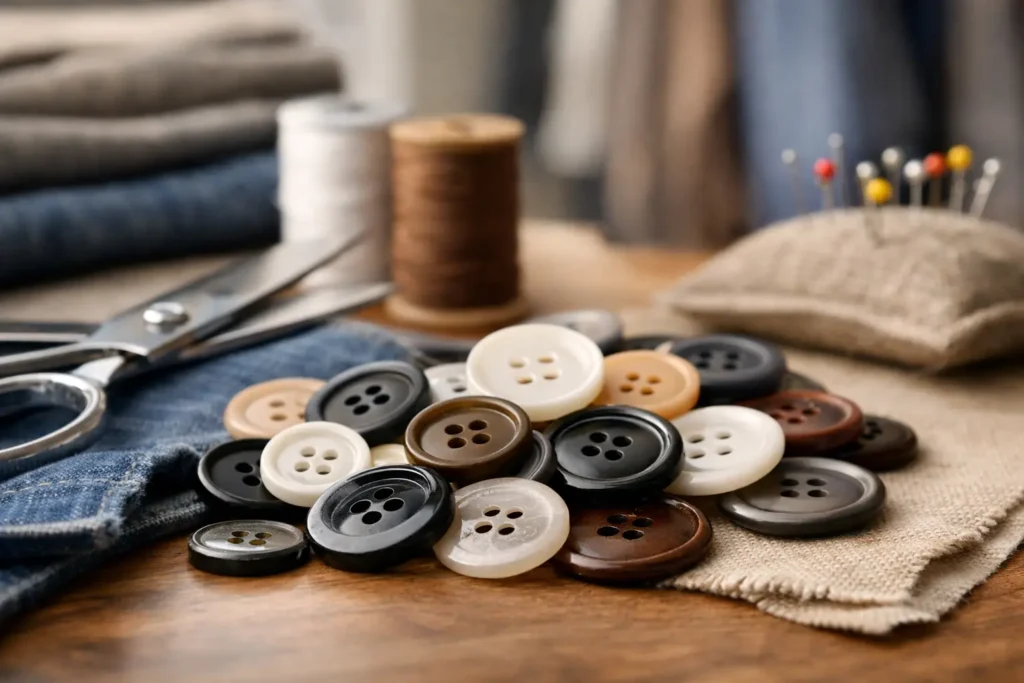
A shirt button can be only 12 mm wide, yet a failed button program can delay an entire garment shipment. When sourcing sew through buttons wholesale, apparel buyers need more than an attractive sample: they need a factory that can reproduce the approved design consistently across bulk production, colorways, and delivery schedules.
For brands, garment manufacturers, and sourcing teams, sew-through buttons remain one of the most versatile trim categories in apparel. Their construction is straightforward, but the production decisions behind them are not. Material behavior, hole placement, thickness tolerance, dye matching, polishing, packing, and inspection all influence how the finished garment performs on the production line and in the customer’s hands.
What Defines a Sew-Through Button?
A sew-through button has two, four, or occasionally more holes drilled or molded directly through the button face. Unlike shank buttons, which attach through a loop on the back, sew-through styles sit close to the garment and are secured with thread passing through the face.
This construction works across a wide range of apparel, from dress shirts and blouses to knitwear, workwear, children’s clothing, trousers, uniforms, and light outerwear. Four-hole buttons are widely used where a stable attachment and balanced appearance are required. Two-hole styles can create a cleaner, more minimal look, especially for shirts, cardigans, and fashion collections.
The right style depends on garment use. A lightweight blouse may require a thin, polished button with fine holes for a delicate sewing thread. A uniform shirt or workwear overshirt may need a thicker button, stronger material, and a hole size that supports faster automated sewing. The visual design and the sewing operation should be specified together.
Sew Through Buttons Wholesale: What Buyers Should Specify
Wholesale pricing is meaningful only when the product specification is clear. Two buttons with the same diameter can have very different costs and production requirements depending on the raw material, thickness, finish, custom tooling, and quality standard.
A complete inquiry should identify the intended garment, estimated quantity, target button size, required color, and desired material. If a physical reference button or tech pack is available, it helps the factory evaluate the shape, hole pattern, edge profile, and surface finish before sampling begins.
The most useful specifications include:
- Diameter and thickness, stated in millimeters or ligne
- Two-hole or four-hole construction, including hole diameter and spacing
- Material requirement, such as resin, corozo, horn, ceramic, recycled material, or metal
- Color standard, Pantone reference, fabric swatch, or approved physical sample
- Surface finish, including matte, polished, pearlescent, textured, engraved, or laser-marked
- Quantity by size, color, and garment style, plus required delivery date
These details reduce sampling revisions and allow the manufacturer to quote accurately. They also prevent a common sourcing problem: approving a button based on appearance without confirming whether its holes, thickness, or edge shape are suitable for bulk sewing.
Material Choice Changes More Than Appearance
Polyester resin is a practical choice for many bulk apparel programs because it offers consistent color control, broad design flexibility, and dependable production scalability. It can be molded into clean shirt-button shapes, imitation horn effects, marbled patterns, translucent finishes, and custom logo designs.
Corozo offers a natural, premium character with subtle grain variation. It is often selected for elevated shirting, tailoring, knitwear, and collections where a natural-material story matters. Because corozo is a natural material, slight variation is part of its appeal, but approval standards should define the acceptable range of color and surface character.
Horn buttons bring organic depth and a distinctive luxury appearance. They are suited to premium outerwear, suiting, and heritage-inspired garments, although buyers should consider variation, material availability, and the more detailed sorting required for a consistent production lot.
Recycled resin and other recycled materials support sustainability-focused product development. The trade-off is that recycled content can create variation in tone or texture, depending on the formulation. For these projects, a realistic approved sample and a defined tolerance are particularly valuable.
Design for Sewing, Not Only for Sampling
A button can look excellent in a sample room and still cause trouble during garment assembly. Hole edges that are too sharp may abrade thread. Holes that are too small can slow sewing or create needle-threading issues. A button that is too thick for the placket can sit awkwardly, while one that is too thin may feel weak on a heavier garment.
For this reason, button development should include a sewing trial whenever possible. The sample should be tested with the actual fabric, thread, buttonhole size, and sewing method planned for production. This is especially relevant for automated operations, where small differences in hole position or button thickness can affect machine performance.
Button size should also relate to garment proportion. A standard shirt may use 11.5 mm to 15 mm buttons, while coats, overshirts, and trousers may require larger sizes. There is no single correct measurement. The objective is a button that looks proportionate, passes smoothly through the buttonhole, and remains secure through repeated use.
Custom Branding Without Sacrificing Function
Sew-through buttons offer several options for brand identification. A logo can be engraved, molded, laser-marked, printed, or incorporated through a custom face pattern. The best method depends on material, artwork detail, expected wear, and target price.
Subtle branding often performs better than oversized marks. A small logo around the rim, a recessed back mark, or a custom mold profile can add recognition while keeping the button appropriate for the garment. For premium apparel, the back of the button is often an effective place for a logo because it preserves a clean front appearance.
Custom molds require upfront development, so they are most efficient when a design will be used across multiple seasons or product categories. For shorter programs, stock shapes with custom colors, finishes, or laser branding can provide a faster and more economical route.
Quality Control That Supports Bulk Garment Production
A wholesale button order should be evaluated as a production component, not a decorative accessory. Consistency matters because a garment factory may be sewing thousands of units per day. Even minor variation can interrupt the line, increase rejection rates, or create visible inconsistency on finished garments.
Quality control should check dimensions, thickness, hole placement, hole cleanliness, color consistency, surface defects, and overall finish. Depending on the material and garment application, inspection may also include pull resistance, heat tolerance, wash performance, or corrosion resistance for mixed-material designs.
Color approval deserves particular attention. Buttons can appear different under daylight, factory lighting, and retail lighting. A factory should work from an approved standard, whether that is a Pantone reference, a fabric swatch, or a signed physical sample. For garments with several colorways, keeping approved standards organized by style and color helps avoid avoidable mismatches during repeat orders.
At NZXTRIM, production support can begin with material and design evaluation, then continue through prototyping, bulk manufacturing, inspection, packing, and export coordination. This factory-led approach is useful when the button must match a garment’s visual direction while also meeting practical production requirements.
Planning MOQ, Sampling, and Delivery
The best MOQ depends on whether the button uses an existing mold or a fully custom design. Stock shapes and standard materials can support more flexible quantities, while custom molds, special effects, and complex logo details usually require a larger order to distribute development costs effectively.
Sampling should not be treated as a formality. It is the point where buyers can confirm color, material feel, hole construction, engraving clarity, and garment compatibility before approving bulk production. For critical programs, retain an approved sample as the production reference and confirm any tolerance requirements in writing.
Delivery planning should account for sample approval, raw material preparation, production capacity, inspection, packing, and international transit. If a launch date is fixed, provide the required in-house date rather than only the shipping date. This gives the manufacturer a more accurate basis for planning production and recommending the appropriate shipping method.
Build the Button Program Around the Garment
The strongest button sourcing decisions begin with the garment’s actual needs: its fabric weight, sewing process, wash standard, price point, brand position, and delivery calendar. A refined button is valuable only when it can be produced consistently and sewn efficiently at scale.
Before placing a wholesale order, send the garment details, reference material, quantity plan, and required timeline with the inquiry. That information gives a button factory the practical basis to recommend the right material, construction, and production path – and gives your team a better chance of approving a button that performs as well as it looks.