
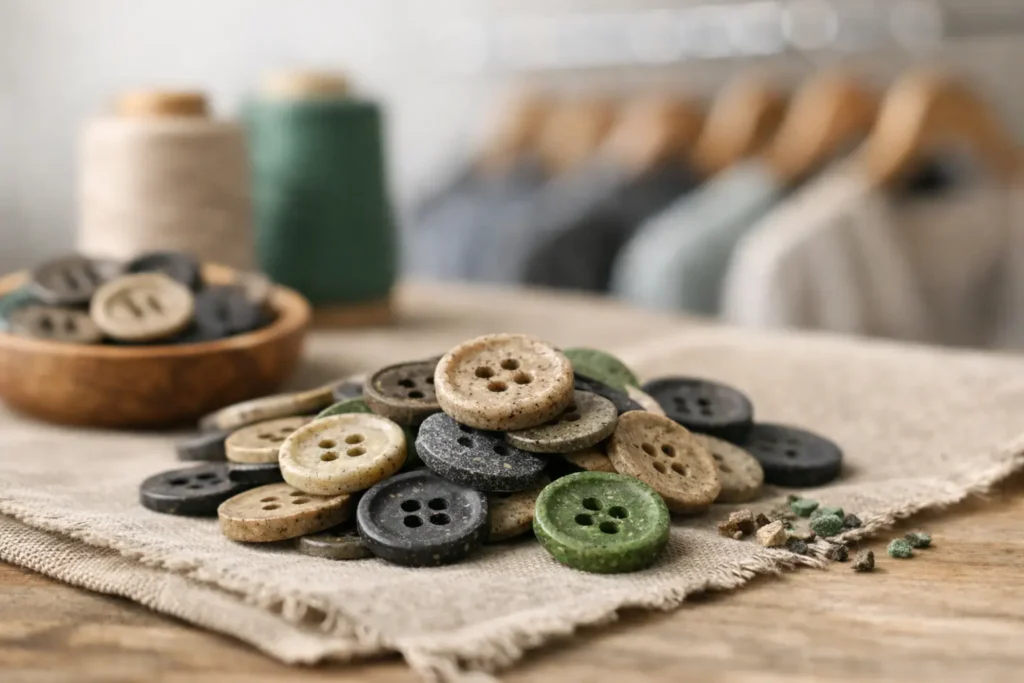
A button can be one of the smallest components on a garment and still create one of the largest sourcing risks. If its color shifts between lots, its shank breaks during sewing, or its recycled-content claim cannot be supported, the issue reaches far beyond the trim itself. For brands and manufacturers, recycled buttons for apparel must meet the same standards for appearance, performance, and delivery reliability as any conventional button.
The right choice depends on the garment category, intended wear, wash requirements, target price, and the level of environmental documentation required by the brand. Recycled content is valuable, but it is only one part of a production-ready specification. A dependable button program also requires stable material sourcing, controlled molding or finishing, accurate color development, and quality checks that continue through bulk production.
Why recycled buttons for apparel require careful specification
Recycled buttons are made using recovered materials rather than entirely virgin raw materials. Depending on the button type, that may include recycled polyester, recycled nylon, recycled ABS, reclaimed resin, recovered metal, recycled paper-based composites, or production offcuts that are reprocessed for new use.
These materials can help apparel companies reduce reliance on virgin inputs and support product-level sustainability goals. They also allow designers to create distinctive finishes, including speckled effects, marbling, soft matte surfaces, translucent looks, and natural-looking irregularity. For many collections, those visual characteristics become part of the design story rather than a compromise.
However, recycled material can behave differently from virgin material. Feedstock variation may affect color consistency, flow during molding, surface texture, impact strength, or gloss level. This does not mean recycled buttons are less suitable for quality apparel. It means the factory must understand the material, establish realistic tolerances, and validate performance before approving bulk production.
For a basic shirt button, a small visual variation may be acceptable or even desirable. For a luxury uniform program requiring thousands of matching pieces over repeat orders, color and size control should be much tighter. The right standard is determined by the garment application, not by a general claim that one material is better than another.
Common recycled button materials and their applications
Recycled polyester buttons
Recycled polyester is a practical choice for shirts, blouses, uniforms, workwear, childrenswear, and many fashion garments. It can be molded into two-hole and four-hole buttons, shaped buttons, logo buttons, and a broad range of colors. It is typically valued for durability, color flexibility, and cost control in volume production.
For apparel programs requiring frequent washing, recycled polyester buttons should be tested with the actual garment care process. Heat, detergents, dry cleaning chemicals, and abrasion can affect the button surface differently depending on the formula and finish. A factory should confirm the intended wash standard before material selection is finalized.
Recycled resin and composite buttons
Recycled resin buttons can offer strong visual versatility. They may include recycled content from recovered resin materials or controlled factory offcuts, then be molded, polished, laser-marked, or finished to create custom effects. These buttons are often suitable when a brand wants richer color depth, a horn-like appearance, or a more fashion-focused surface.
Because resin formulations vary, brands should review approved samples carefully under the lighting conditions where the garment will be sold or photographed. A button that looks correct in a sample room can appear warmer, cooler, or more translucent under retail lighting.
Recycled metal buttons
Recycled metal is widely used for denim buttons, jeans rivets, snap components, military-style buttons, and premium outerwear trims. It provides weight, durability, and a high-value appearance. Custom logos can be stamped, engraved, embossed, or cast, then finished in antique, matte, brushed, painted, or plated effects.
The key consideration is finish durability. Metal buttons may need corrosion resistance, coating adhesion, salt spray testing, or wash testing based on the garment category. Outerwear, workwear, and denim often demand different testing conditions than a fashion jacket worn occasionally.
Recycled natural-look materials
Some collections require a lower-impact visual language that feels organic rather than highly uniform. Recycled paper composites, reclaimed shell-like materials, and mixed-content compounds can create that effect. Their natural variation can be appealing for casualwear, resort collections, and environmentally focused labels.
These materials need especially clear approval standards. If each button has visible flecks, tonal movement, or texture variation, the brand should define what is acceptable before production. A reference sample and written quality criteria prevent normal material character from being mistaken for a defect during inspection.
Start with garment performance, not only material preference
A sourcing brief should begin with how the button must perform. A lightweight rayon blouse, industrial uniform, wool overcoat, and denim jean may all use recycled content, but they require very different button constructions.
For shirts and blouses, consider button thickness, sewability, edge smoothness, and compatibility with automated button-sewing equipment. For outerwear, evaluate tensile strength, shank construction, impact resistance, and appearance after dry cleaning. For childrenswear, product safety requirements, secure attachment, smooth edges, and small-part considerations should guide the design from the start.
Garment manufacturers should also consider button size in relation to fabric weight and buttonhole construction. An oversized button can pull on a lightweight fabric. A thin button may look weak on a heavy coat. The button must function as part of the garment system, not as an isolated accessory.
Customization options that protect brand identity
Recycled content does not limit custom design. Brands can still specify diameter, thickness, hole configuration, shank type, color, logo treatment, surface texture, and finishing method. A custom mold may be the right choice for a proprietary silhouette, while a standard shape with custom color and laser logo can reduce development cost and shorten lead time.
Color matching deserves special attention. Recycled materials may have a base tone that influences the final color, particularly in light shades, translucent effects, and off-white tones. Providing a physical swatch, Pantone reference, or approved garment fabric helps the factory develop samples more accurately. For repeat programs, retain a sealed color standard and approved button sample for future comparison.
Logo details must also be matched to the material and button size. Fine lettering that looks sharp on a large metal button may not reproduce clearly on a small molded shirt button. A production-focused supplier can advise on minimum line width, depth, and spacing before tooling begins, avoiding costly mold revisions later.
Sampling is where production risk is reduced
A sample is not only a design approval. It is the first opportunity to confirm whether the selected recycled material can meet functional and visual expectations. Before mass production, brands should assess size, weight, color, finish, logo clarity, edge quality, hole shape, and compatibility with the garment sewing process.
Where performance matters, the sample stage should also include relevant testing. Depending on the application, this can include washing, dry cleaning, abrasion, pull strength, corrosion, color migration, coating adhesion, and repeated opening or fastening tests. The test plan should reflect the end use rather than applying unnecessary requirements that add cost without improving product performance.
Sampling may take longer when a factory must source a specific recycled feedstock, create a new mold, or develop an exact color. That additional time is often worthwhile. Rushing from concept directly to bulk production can create far greater delays if the button must be remade after garment sewing has already started.
Managing consistency in bulk production
Reliable bulk supply depends on process control. The button factory should maintain approved production standards for material formulation, color reference, dimensions, logo artwork, finish, and packing method. Inspection should occur during production, not only after cartons are packed.
For large orders, lot-to-lot consistency is a practical concern. Recycled feedstock may naturally vary, so the supplier should manage raw-material batches and communicate any anticipated variation early. When a brand expects repeat orders over multiple seasons, it is useful to discuss material availability, color retention, mold storage, and reorder lead times at the beginning of the program.
Packaging also matters. Buttons should be counted accurately, protected from scratches or deformation, and labeled clearly by style, size, color, and lot. These details help garment factories avoid mixing components on the sewing line and make incoming inspection more efficient.
Questions to ask a recycled button manufacturer
A capable supplier should be able to explain what recycled material is being used, how the button will be manufactured, and what level of variation can reasonably be expected. Ask whether the factory can provide recycled-content documentation when required, develop custom molds, match your target color, and support performance testing for the intended garment category.
It is also useful to confirm minimum order quantities, sample timing, bulk lead time, quality inspection procedures, packaging specifications, and shipping support. A low initial unit price is not always the lowest total cost if it leads to production delays, inconsistent lots, or high rejection rates at the garment factory.
NZXTRIM supports apparel brands, designers, and garment manufacturers from button development through bulk production, helping translate material ideas into specifications that can be produced consistently. For custom recycled buttons, early communication between the design team, sourcing team, button factory, and garment factory is the most effective way to protect quality and delivery timing.
The strongest recycled button program is not defined by a material claim alone. It is built by selecting a suitable material, approving a realistic visual standard, testing for the garment’s actual use, and partnering with a factory that can repeat the result at production scale.