
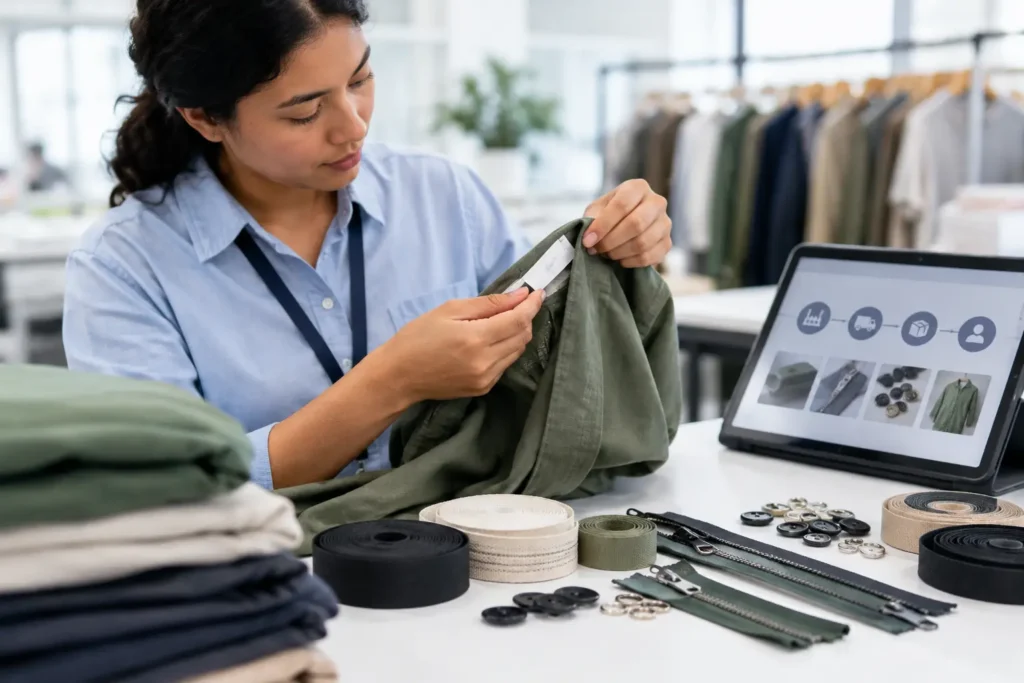
A button can be approved in a sample room and still create a bulk-production problem months later. The issue is often not the button design itself. It is the missing record of which material was approved, which finish was used, what changed after sampling, and which production lot was delivered to each garment factory. Trim traceability gives product, sourcing, and quality teams a practical way to follow those details without relying on email threads, memory, or an image attached to an old purchase order.
For custom buttons, traceability is not a single document. It is a connected set of records that identifies the approved specification, development history, material inputs, production lot, inspection status, packing reference, and shipment destination. The right level of detail depends on the garment program. A seasonal fashion style may need a focused approval trail, while uniforms, workwear, replenishment programs, or multi-factory orders may require deeper lot control.
What Trim Traceability Means for Custom Buttons
In apparel production, trim traceability means being able to answer a basic set of questions quickly: What button was ordered? What was it made from? Which approved sample does it match? When was it produced? Which lot was sent to which factory? If an issue is reported, what other garments or shipments may be affected?
A useful traceability system starts with a unique button reference. This should remain consistent from development through bulk production, even when the garment style number, purchase order, or delivery destination changes. The reference can connect the button’s material, size, construction, finish, logo treatment, color target, and packing instructions.
For example, a four-hole resin button and a shank metal button should never be tracked only as “black logo button.” That description leaves too much room for substitution or confusion. Production-ready identification should distinguish the material family, diameter or Ligne size, thickness where relevant, hole or shank construction, surface finish, logo method, target color, and approved version.
Visual concepts are helpful at the design stage, but they are not enough for traceability. A render may show a matte black button with a recessed logo. It does not establish the resin formulation, gloss range, edge profile, logo depth, color tolerance, or attachment construction needed for repeatable bulk production.
The Records That Make Traceability Work
The most effective systems are clear enough for a product developer to use and disciplined enough for a factory team to act on. They do not need to be overly complex, but the core records must be controlled.
The approved trim specification
The specification is the anchor record. It should state the button code, material, dimensions, construction, color reference, finish, logo artwork revision, and packing requirement. Where a button has a plated, painted, laser-marked, or coated surface, the specification should identify that process rather than describing only the visual result.
Material descriptions need particular care. “Natural button” is not a sufficient production description. Corozo, horn, shell, wood, ceramic, metal, resin, and recycled-content materials behave differently in color development, surface variation, tooling, and production consistency. If the appearance of natural material variation is acceptable, that acceptance should be recorded. If a uniform appearance is required, the target and allowable variation need to be discussed before bulk production.
The sample and approval trail
Traceability should show which sample was reviewed and what was approved. This includes the sample date, revision number, comments, and any conditions attached to approval. A comment such as “approved, but use a less glossy finish” is a production change, not an informal preference.
The approval trail is especially valuable when several teams are involved. The brand may approve the logo appearance, the garment manufacturer may review sewability, and the sourcing team may confirm the final order quantity and delivery split. Bringing these decisions into one controlled record reduces the risk of one party working from an earlier sample.
Production lot and inspection references
Once bulk production begins, each lot should be identifiable. A lot reference connects the finished buttons to the manufacturing period, quantity, and applicable quality review record. It allows a supplier and buyer to isolate a concern instead of treating every shipment as potentially affected.
Inspection records should relate to the agreed specification, not a vague assumption of quality. For buttons, relevant checks may include size, visual finish, color comparison, logo definition, construction, hole condition, shank security where applicable, and packing count. The appropriate review points depend on the button material and intended garment use.
Packing, shipment, and receiving records
Traceability becomes less useful if it stops at the factory gate. Carton markings, packing lists, shipment references, and delivery allocation should preserve the link between the trim lot and the receiving garment factory. This matters when one button order is split across several factories, countries, or garment styles.
At receiving, the garment factory should be able to confirm the button code, lot reference, quantity, and visible condition against the packing documents. This does not replace factory incoming inspection, but it gives the receiving team a reliable starting point if there is a discrepancy.
Why Traceability Prevents Expensive Production Delays
The commercial value of trim traceability is speed of decision-making. If a garment factory reports that a supplied button looks different from the approved sample, the team needs to determine whether the issue concerns one carton, one production lot, one finish variation, or the original specification itself.
Without records, the response often becomes broad and slow. Teams may hold all available stock, request replacement samples, search old emails, and debate which version was approved. With traceable records, they can compare the reported lot with the approved sample and relevant production details, then decide whether sorting, replacement, further review, or release is appropriate.
Traceability also supports continuity across seasons. A carryover style may use the same button code, but the new order should still confirm whether the material, logo tool, color reference, construction, and finish remain unchanged. If a change is required because of material availability, revised branding, or a different garment application, it should create a new revision rather than being hidden under the previous approval.
Where Traceability Needs More Detail
Not every button program needs the same level of control. The right approach depends on material, design complexity, order structure, and risk.
Natural materials such as horn, shell, corozo, and wood may require more detailed sample references because natural grain, tone, and surface character can vary. The goal is not to eliminate inherent variation that belongs to the material. It is to define what the approved range looks like and prevent unexpected changes in material selection or finishing.
Custom metal buttons may need clear records for base material, construction, finish, logo tooling, and protective surface treatment where used. Small differences in plating tone, brushed direction, enamel fill, or edge detail can be noticeable on a finished garment.
For resin or color-developed buttons, the color reference and approved physical standard are central. A Pantone reference can guide development, but it does not by itself define the final appearance on every material, texture, or finish. The approved physical sample remains important, particularly for matte, translucent, marbled, pearlized, or textured effects.
Programs with multiple garment factories need a deliberate allocation plan. If Factory A receives one lot and Factory B receives another, the records should show that split. This becomes critical if a later issue is limited to one production lot or delivery.
Building a Practical Traceability Process
A workable process begins before the first sample request. Assign a trim code, collect the production requirements, and establish which documents will control approval. Do not wait until bulk production to decide how lots will be identified.
During development, keep the artwork revision, material decision, color target, and construction notes together. When physical samples are reviewed, record decisions precisely. “Approved” is useful only when everyone knows which sample version it refers to.
Before bulk production, confirm the final specification against the approved sample and purchase order. This is the point to resolve differences between a visual request and a manufacturable requirement. Tooling, minimum order quantity, lead time, testing needs, and delivery planning should be confirmed for the specific button construction and order rather than assumed from a previous project.
During production and delivery, maintain lot references through packing and shipment documentation. The process does add administrative discipline, but the trade-off is usually favorable. A few controlled references at the start can prevent broad production holds, duplicate sampling, and unclear responsibility later.
NZXTRIM can support custom button projects with specifications, physical sample review, production references, and delivery planning aligned to the needs of the garment program. The required traceability depth should be agreed early, especially where multiple materials, factories, or delivery destinations are involved.
A button is a small component, but it can stop a finished garment from shipping. Clear trim traceability turns that component from an uncertain detail into a controlled part of the production plan.