
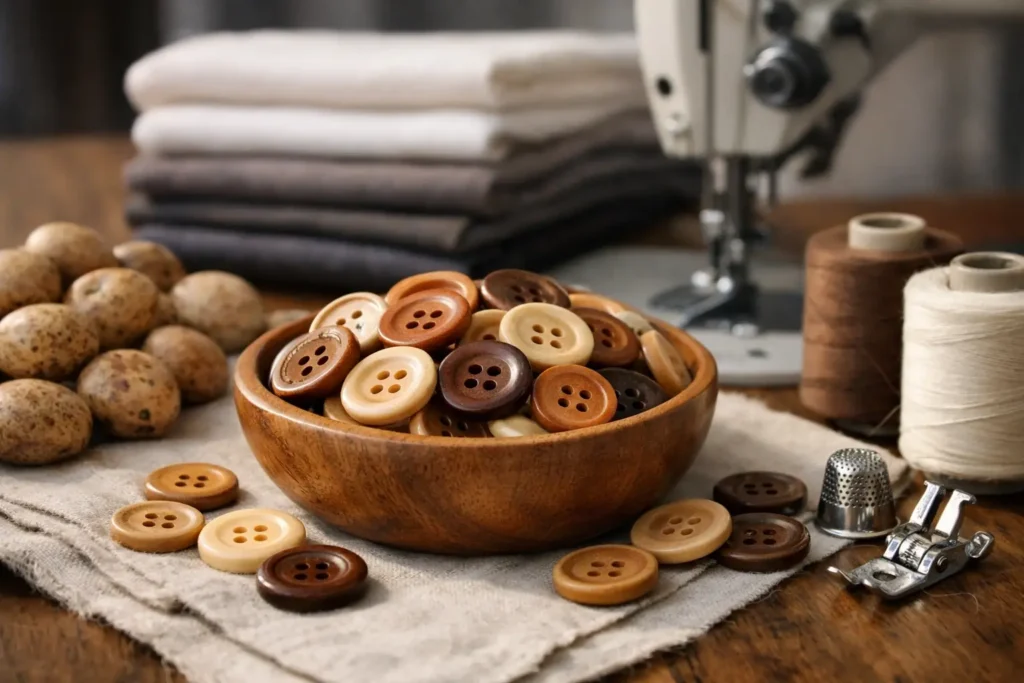
A shirt button can be only 15 mm wide, yet it can determine whether a garment feels refined, natural, and worth its price point. For buyers sourcing corozo buttons wholesale, the decision is not simply about finding a low unit cost. It is about selecting a natural material, defining a repeatable specification, and securing a factory partner that can maintain the same appearance from approved sample through bulk delivery.
Corozo is valued by fashion brands because it has a dense, plant-based composition and a distinctive grain that gives garments a warm, premium character. It is widely used for shirts, knitwear, outerwear, trousers, workwear, and tailored apparel. However, its natural origin also means buyers should set realistic expectations for shade, texture, and production variation before placing a wholesale order.
Why Corozo Is a Strong Choice for Apparel Buttons
Corozo, often called vegetable ivory, is made from the tagua nut. After the nut is dried and stabilized, it can be cut, shaped, dyed, drilled, engraved, and polished into garment buttons. Its hardness supports clean machining and durable buttonholes, while its natural grain creates more depth than many standard plastic alternatives.
For apparel collections built around natural materials, heritage styling, or elevated everyday wear, corozo can strengthen the story of the garment without looking overly decorative. It works particularly well when the fabric has visible texture, such as cotton twill, linen, wool, denim, corduroy, and brushed flannel.
Material choice should still match the intended use. A polished resin button may be better for highly consistent bright colors. Metal may be the right choice for a heavy-duty denim closure. Corozo is most compelling when the buyer wants a natural-looking button with reliable performance and room for custom finishing.
What to Specify When Buying Corozo Buttons Wholesale
Wholesale pricing is meaningful only when the product specification is clear. Two corozo buttons with the same diameter can vary significantly in price and appearance based on thickness, shape, dye process, finish, hole configuration, and logo treatment. A complete specification prevents costly revisions during sampling or bulk production.
Start with button size. Apparel buyers commonly specify sizes in millimeters or lignes, but the factory should confirm the final measurement standard before production. A 15 mm shirt button, a 20 mm trouser button, and a 25 mm outerwear button each require different thickness and strength considerations. Larger buttons may need a thicker profile to avoid looking flat or feeling weak against substantial fabric.
Next, define the shape and edge. Common options include flat, slightly domed, rimmed, concave, and horn-style profiles. The edge can be rounded for a soft appearance or sharpened for a cleaner, more tailored look. Small changes in profile affect the mold or machining process, polishing time, and final unit price.
Color requires particular attention. Corozo accepts dye well, but because it is a natural substrate, the base tone and grain can influence the final result. A buyer requesting black, navy, olive, or a custom brand color should provide a physical color standard when possible. Lab dips or pre-production color samples are especially useful for fashion programs where the buttons must coordinate with fabric, thread, labels, and packaging.
The hole pattern also affects function and appearance. Two-hole and four-hole corozo buttons are standard for shirts and light apparel. Shank buttons are often selected for coats, knitwear, or decorative placements. The hole diameter, spacing, and countersink must suit the sewing method used by the garment factory. A button that looks correct but does not run efficiently on the sewing line creates avoidable production delays.
For branded programs, logo engraving, laser marking, debossing, or raised details can be added. Buyers should consider whether the logo needs to be visible from a distance or remain a subtle brand signature. Fine artwork may need to be simplified to remain clear on a small button surface.
Natural Variation Is Part of the Material
Unlike injection-molded plastic, corozo does not produce a perfectly identical grain on every piece. Its natural surface may show small tonal shifts, pores, or pattern differences. For many premium brands, this is a benefit rather than a defect. It gives the garment a more authentic material character.
The key is to define acceptable variation during the sample approval stage. Buyers should agree on the approved color range, surface finish, grain visibility, and defect tolerance. A factory should also separate material grades appropriately and inspect for cracks, chips, weak holes, discoloration, and dimensional inconsistency before packing.
There is a balance to manage. If the target is a visibly natural, washed, or vintage finish, more grain movement may be desirable. If the collection needs a uniform formal appearance, a deeper dye, controlled polishing process, and tighter sorting standard may be required. Neither approach is inherently better. The correct choice depends on the garment design and brand position.
Sampling Before Bulk Production
A physical sample is the most useful checkpoint in a corozo button project. Digital artwork and color references establish direction, but they cannot fully show the feel, thickness, dye penetration, or surface polish of the finished material.
For a new development, the sample process should confirm the size, profile, color, holes or shank, logo placement, and finish. It should also be evaluated against the actual garment fabric whenever possible. A button can appear too glossy on a rustic linen shirt or too matte on a refined wool jacket, even if it looks correct on its own.
After approval, retain a sealed reference sample for bulk inspection. This is particularly valuable for repeat orders, where the purchasing team expects the next delivery to match the original approved standard. A dependable manufacturer documents the specification and uses the approved sample as a production control reference, not merely as a sales sample.
Production Factors That Affect Wholesale Cost
The most competitive corozo buttons wholesale quotation is not always the lowest initial number. Buyers should compare quotations based on the same technical requirements and the same service scope. A price may differ because one supplier has included custom tooling, color matching, individual inspection, special packaging, or export preparation while another has not.
Quantity remains a major cost factor. Larger production runs spread development, setup, and color-processing costs across more buttons. However, purchasing excessive inventory simply to reach a lower price can create its own risk if the collection color or style changes. Brands with frequent seasonal updates may benefit from planning a practical order quantity and discussing repeat-order capability with the factory.
Custom molds or special shapes can increase startup cost, but they also help create a distinctive product. For a core style that will run across multiple seasons, custom development may provide stronger brand value than selecting a standard catalog button. For a short-term fashion capsule, an existing shape with a custom color or logo may be the more efficient route.
Packing requirements also matter. Loose bulk packing may suit a garment factory with automated sorting, while carded, counted, or size-separated packing can improve handling accuracy for smaller production lines. The right packaging should protect the button finish and fit the receiving factory’s workflow.
Quality Control for Garment-Ready Buttons
A factory-grade quality process should begin with incoming material selection and continue through cutting, shaping, dyeing, drying, polishing, drilling, logo treatment, and final packing. Corozo must be processed with controlled moisture and drying conditions to support stability during use and transport.
Finished buttons should be checked for size and thickness consistency, hole quality, surface defects, color variation, and finish uniformity. For dyed buttons, practical colorfastness testing may also be needed based on the garment’s end use. Uniforms, children’s clothing, outerwear, and washed garments may require more specific testing than a low-wash fashion item.
NZXTRIM supports buyers from material selection and prototype development through bulk production, inspection, and global shipment coordination. This production-focused approach helps sourcing teams avoid the common gap between an attractive sample and an inconsistent factory delivery.
Planning Delivery With Fewer Surprises
Lead time for corozo buttons depends on quantity, customization level, color development, and the production schedule. A standard shape in an established color can move faster than a new logo button requiring custom tooling and several sample revisions. The most reliable purchasing plan allows time for sample approval before the garment factory commits to its cutting and sewing schedule.
When requesting a quotation, provide the required quantity by size and color, target delivery date, destination, intended garment use, and whether samples or custom development are needed. This allows the manufacturer to give a realistic production recommendation rather than a generic estimate.
A well-specified corozo button becomes more than a closure. It gives the garment a tactile detail that customers notice, while giving your production team a component they can order again with confidence.